AI App Store Screenshots vs Figma to Code Skills
Side-by-side comparison of features, pros & cons, pricing, and community votes (2026).
🏆 AI App Store Screenshots leads with 0 upvotes
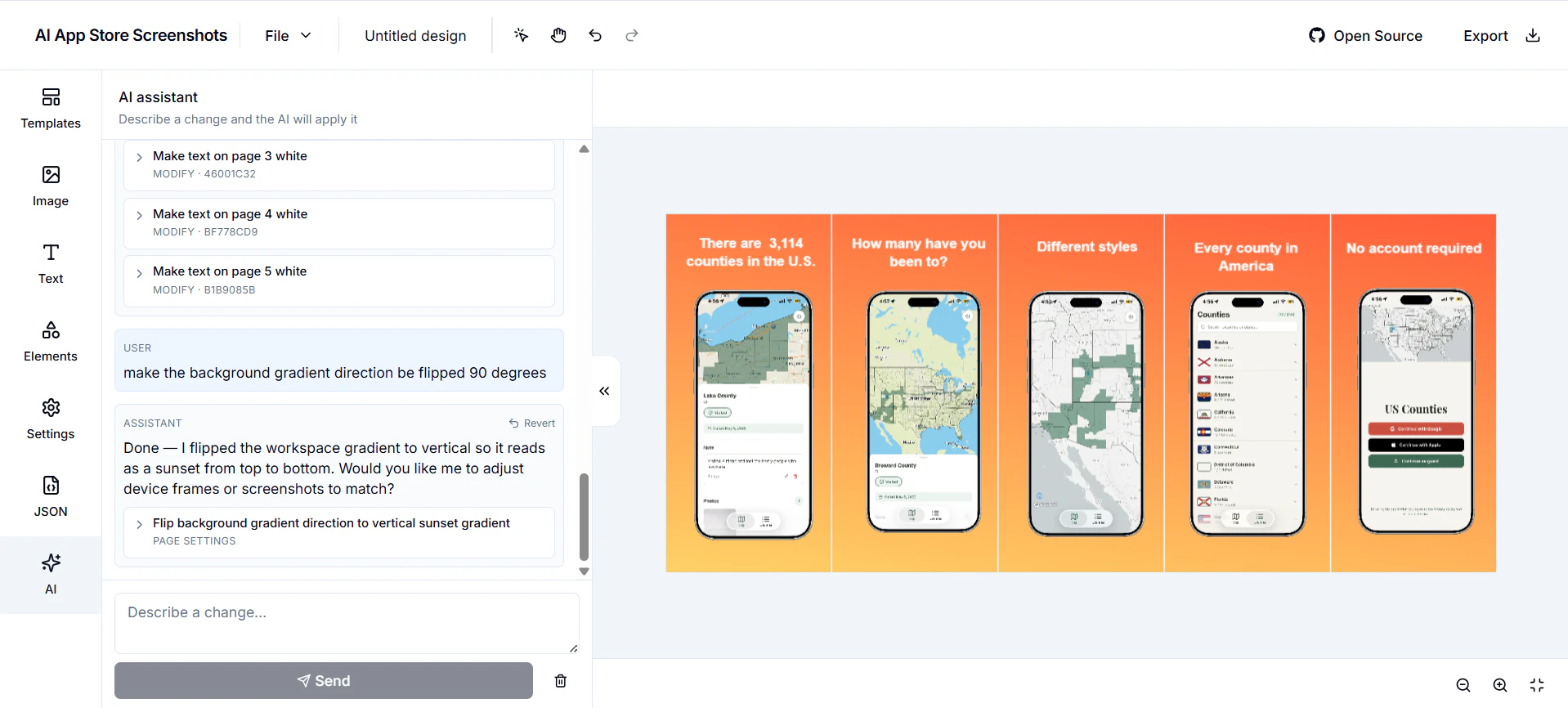
Free and Open Source App Store screenshot designer using AI
AI App Store Screenshots is a specialized design tool tailored for creating compelling app store visuals. Unlike generic graphic design platforms, it focuses solely on crafting app store screenshots, making it ideal for developers and marketers aiming to optimize their app listings. Its standout feature is the integration of AI, allowing users to modify designs effortlessly through AI-driven suggestions and edits. Additionally, it offers a developer-first approach with JSON import/export capabilities, enabling seamless integration into existing workflows. Being open source and self-hostable, it appeals to privacy-conscious users and teams wanting full control over their tools. Essentially, it combines the simplicity of Canva with the power and flexibility needed for app marketing, making it a unique asset for app promotion.
Pros
- Open source and self-hostable, ensuring full control and customization
- AI-powered editing simplifies design adjustments and enhances creativity
- Developer-friendly with JSON import/export capabilities
- Tailored specifically for app store screenshot creation, optimizing for app marketing
Cons
- May have a steeper learning curve for users unfamiliar with JSON or developer-centric tools
- Limited to app store screenshot design, not suitable for broader graphic needs
- Relatively new with no extensive user base or community support yet
Best for
- • Creating and optimizing app store screenshots for mobile apps
- • Designing marketing visuals for app launch campaigns
- • Iterative editing of app visuals with AI assistance
- • Developers integrating customized screenshot templates into their workflows
Pricing: Free and open source, allowing users to self-host and modify without licensing costs; additional features or hosting services may have optional paid support or hosting plans depending on the community or development stage.

The properly way to ship Figma design systems as React
Figma to Code Skills is an innovative tool designed to bridge the gap between design and development by automating the conversion of Figma design systems into production-ready React projects. Built for developers, designers, and teams aiming for seamless handoff, it ensures that design fidelity, accessibility, and design tokens are preserved throughout the process. By leveraging AI and advanced code generation techniques, it produces a well-structured React + Tailwind repository with typed props, making it easier to maintain and scale. Tested on a live fintech build, this solution promises to significantly reduce manual coding time and minimize human error, streamlining the workflow from design to deployment. Its focus on quality, accessibility, and developer experience makes it a valuable asset for modern development teams seeking to ship high-quality, consistent UI components efficiently.
Pros
- Automates the conversion of Figma designs into clean, production-ready React + Tailwind code
- Includes features like typed props, accessibility support, and tokens for consistency
- Reduces manual coding time and human error in design handoff
- Tested on real-world projects, ensuring practical reliability
- Facilitates seamless collaboration between design and development teams
Cons
- Limited information on pricing and subscription plans
- May require initial setup and familiarity with Figma and React workflows
- Potential limitations with highly complex or custom design systems
Best for
- • Converting Figma design systems into React components for web development
- • Accelerating design-to-code workflows in fintech or finance applications
- • Generating accessible UI components with consistent tokens and styles
- • Maintaining design fidelity during rapid prototyping and product iterations
Pricing: Likely offers a freemium model with basic features available for free and premium plans for advanced functionalities, though specific details are not publicly available. Subscription fees may start around a moderate monthly rate suitable for small to large teams.