AI App Store Screenshots vs Figma For AI Agents
Side-by-side comparison of features, pros & cons, pricing, and community votes (2026).
🏆 AI App Store Screenshots leads with 0 upvotes
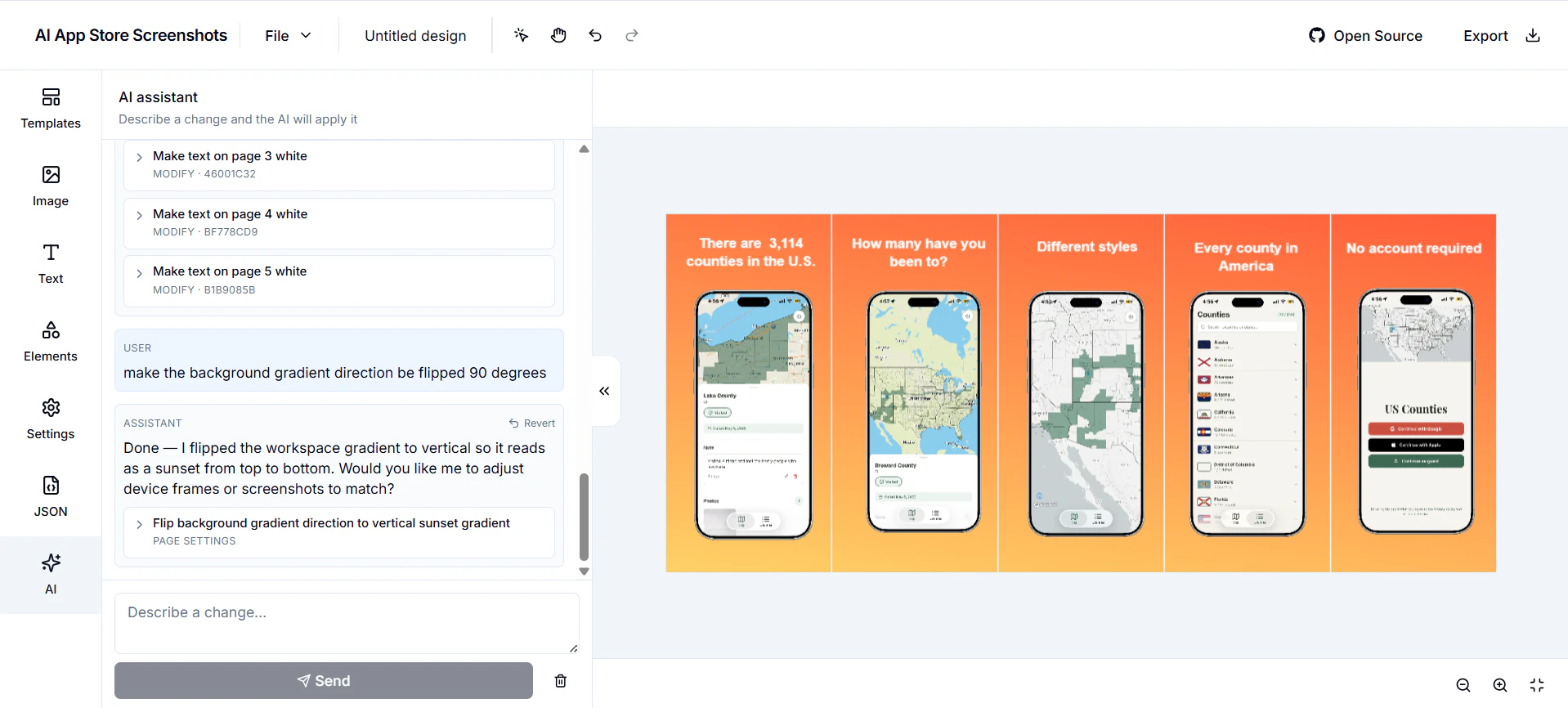
Free and Open Source App Store screenshot designer using AI
AI App Store Screenshots is a specialized design tool tailored for creating compelling app store visuals. Unlike generic graphic design platforms, it focuses solely on crafting app store screenshots, making it ideal for developers and marketers aiming to optimize their app listings. Its standout feature is the integration of AI, allowing users to modify designs effortlessly through AI-driven suggestions and edits. Additionally, it offers a developer-first approach with JSON import/export capabilities, enabling seamless integration into existing workflows. Being open source and self-hostable, it appeals to privacy-conscious users and teams wanting full control over their tools. Essentially, it combines the simplicity of Canva with the power and flexibility needed for app marketing, making it a unique asset for app promotion.
Pros
- Open source and self-hostable, ensuring full control and customization
- AI-powered editing simplifies design adjustments and enhances creativity
- Developer-friendly with JSON import/export capabilities
- Tailored specifically for app store screenshot creation, optimizing for app marketing
Cons
- May have a steeper learning curve for users unfamiliar with JSON or developer-centric tools
- Limited to app store screenshot design, not suitable for broader graphic needs
- Relatively new with no extensive user base or community support yet
Best for
- • Creating and optimizing app store screenshots for mobile apps
- • Designing marketing visuals for app launch campaigns
- • Iterative editing of app visuals with AI assistance
- • Developers integrating customized screenshot templates into their workflows
Pricing: Free and open source, allowing users to self-host and modify without licensing costs; additional features or hosting services may have optional paid support or hosting plans depending on the community or development stage.

Drop-in design systems your AI coding agent can read
Figma For AI Agents is a innovative tool designed to bridge the gap between visual design systems and AI-powered coding agents. It offers getdesign.md, a curated collection of DESIGN.md files that encode a brand's visual language—including colors, typography, spacing, components, and motion—in a format that AI models like Cursor, Claude Code, Lovable, v0, or Bolt can interpret. By integrating these files into AI coding projects, developers and designers can ensure their AI-generated UI outputs are consistent with established brand aesthetics, resulting in more polished and professional interfaces. The platform features over 60 ready-made brand files, with options to request new ones or generate custom designs, making it highly adaptable for different brands and projects. This tool is especially valuable for teams aiming to automate UI creation without sacrificing visual fidelity, streamlining the design-to-code process and saving valuable time and resources.
Pros
- Enables AI agents to produce brand-consistent UI designs
- Large library of ready-made design files for quick deployment
- Supports custom brand requests and generation of new designs
- Facilitates seamless integration with popular AI coding tools
- Simplifies complex design systems into AI-readable formats
Cons
- Limited information on pricing and subscription models
- Requires familiarity with AI coding agents and integration setup
- Dependence on AI understanding; may need manual adjustments for complex designs
Best for
- • Automating UI design for SaaS onboarding screens
- • Creating brand-consistent interfaces for AI-driven chatbots
- • Streamlining rapid prototyping of product interfaces
- • Ensuring visual consistency across multiple AI-generated web pages
Pricing: Likely operates on a freemium model, offering a selection of free design files and premium plans for access to additional features, custom brand requests, or an expanded library. Specific pricing details are not publicly specified.