Waloscan vs Gemini 4 Argon
Side-by-side comparison of features, pros & cons, pricing, and community votes (2026).
🏆 Gemini 4 Argon leads with 301 upvotes
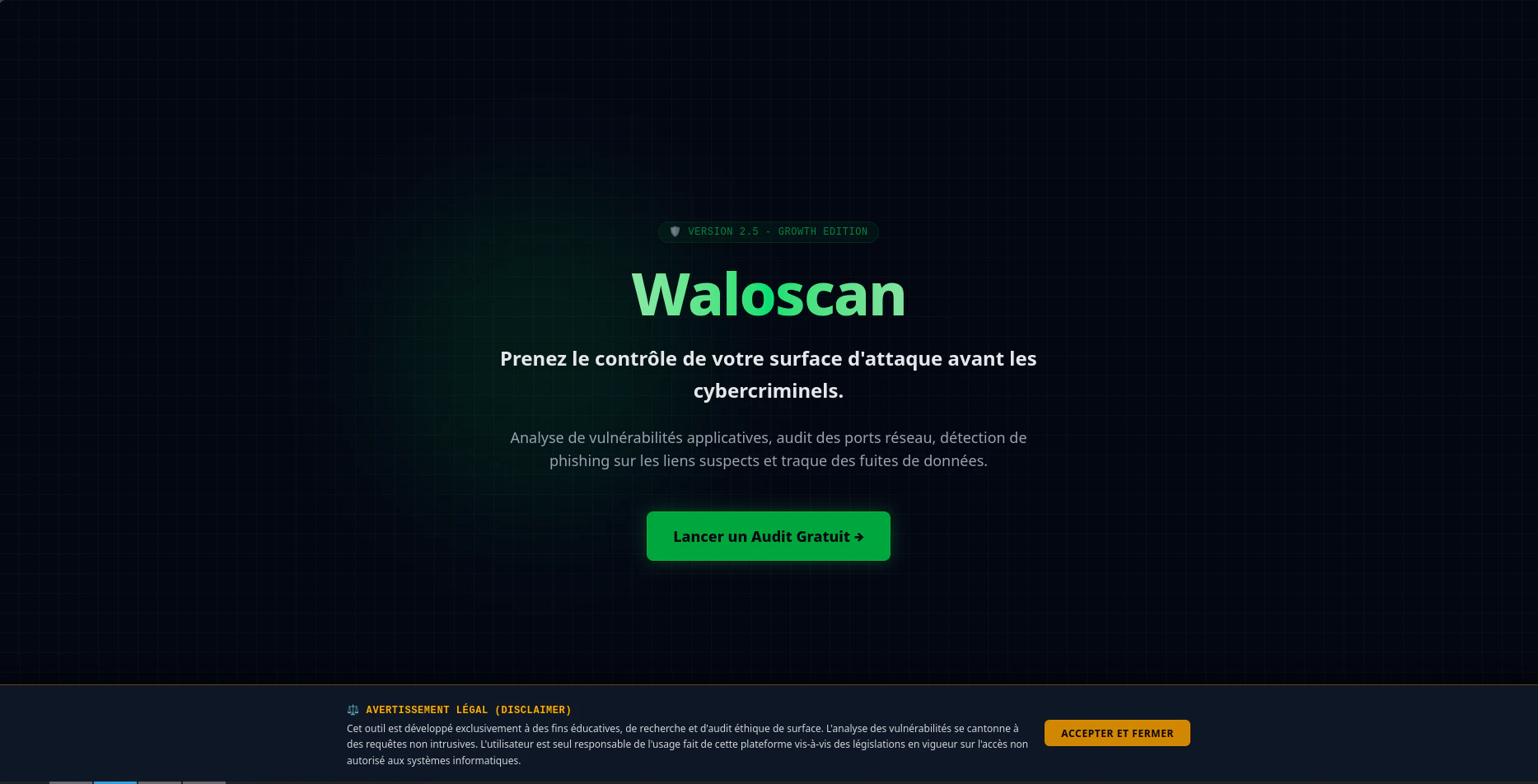
cybersecurity platform for external attack auditing
Waloscan is an open-source cybersecurity platform tailored for external attack surface auditing and threat detection. Designed for security professionals, developers, and organizations, it offers a comprehensive approach to identifying vulnerabilities in web infrastructures. The platform evaluates the external attack surface, helping users understand potential entry points for attackers, and includes specialized tools like the Data Breach Tracker for detecting compromised identities. Its heuristic anti-phishing engine further enhances security by analyzing suspicious links, making it a versatile solution for proactive cybersecurity measures. Built with Python (Flask) and optimized with Rust, Waloscan combines ease of customization with high performance, appealing to both technical teams and open-source enthusiasts. Its open-source nature encourages community contributions, making it adaptable to various security needs and environments.
Pros
- Open-source, highly customizable platform
- Includes specialized tools like Data Breach Tracker and anti-phishing engine
- Built with performant technologies (Python and Rust), ensuring efficiency
- Focuses on external attack surface evaluation and threat detection
- Suitable for security teams, developers, and open-source advocates
Cons
- Requires technical expertise to deploy and customize effectively
- Limited user interface or commercial support options
- Currently lacks detailed documentation for beginners
Best for
- • Auditing the external attack surface of web applications
- • Detecting potential data breaches and compromised accounts
- • Analyzing suspicious links to prevent phishing attacks
- • Enhancing security posture for organizations with open-source tools
Pricing: Waloscan is open-source and free to use, making it accessible for organizations of all sizes. Additional costs may arise from deployment, customization, or hosting, but there are no licensing fees.

Google's frontier model for careful reasoning & complex work
Gemini 4 Argon is Google's cutting-edge AI model designed for tackling complex, long-horizon professional tasks across various industries. It integrates advanced reasoning capabilities, coding proficiency, multimodal understanding, and cybersecurity-defense features, supporting up to 1 million output tokens. This makes it especially suitable for demanding applications in software engineering, finance, legal work, and enterprise research. By focusing on careful reasoning and multi-step problem solving, Gemini 4 Argon aims to assist professionals in navigating intricate workflows and generating detailed, high-quality outputs. Google's approach emphasizes safety and trust, gradually expanding access through trusted testing environments. This combination of power, safety, and versatility positions Gemini 4 Argon as a formidable tool for enterprises seeking an AI solution capable of complex, multi-faceted tasks.
Pros
- Supports extensive output tokens (up to 1 million), enabling long-form and detailed work
- Combines reasoning, coding, and multimodal understanding for diverse professional tasks
- Designed with safety and trust in mind, with controlled access during testing
- Suitable for complex, multi-step workflows in high-stakes industries
- Supports specialized domains such as cybersecurity-defense, finance, and legal work
Cons
- Limited public access currently available, with gradual rollout via trusted testing
- Potentially high computational or operational costs due to its advanced capabilities
- May require significant technical expertise to fully leverage its features
Best for
- • Software engineering: code generation, debugging, and system design
- • Financial analysis: modeling, forecasting, and risk assessment
- • Legal research: document analysis, contract review, and compliance checks
- • Enterprise research: complex data analysis and multi-step problem solving
Pricing: Pricing not verified