WallSplit vs ESP-Mosaico
Side-by-side comparison of features, pros & cons, pricing, and community votes (2026).
🏆 ESP-Mosaico leads with 106 upvotes
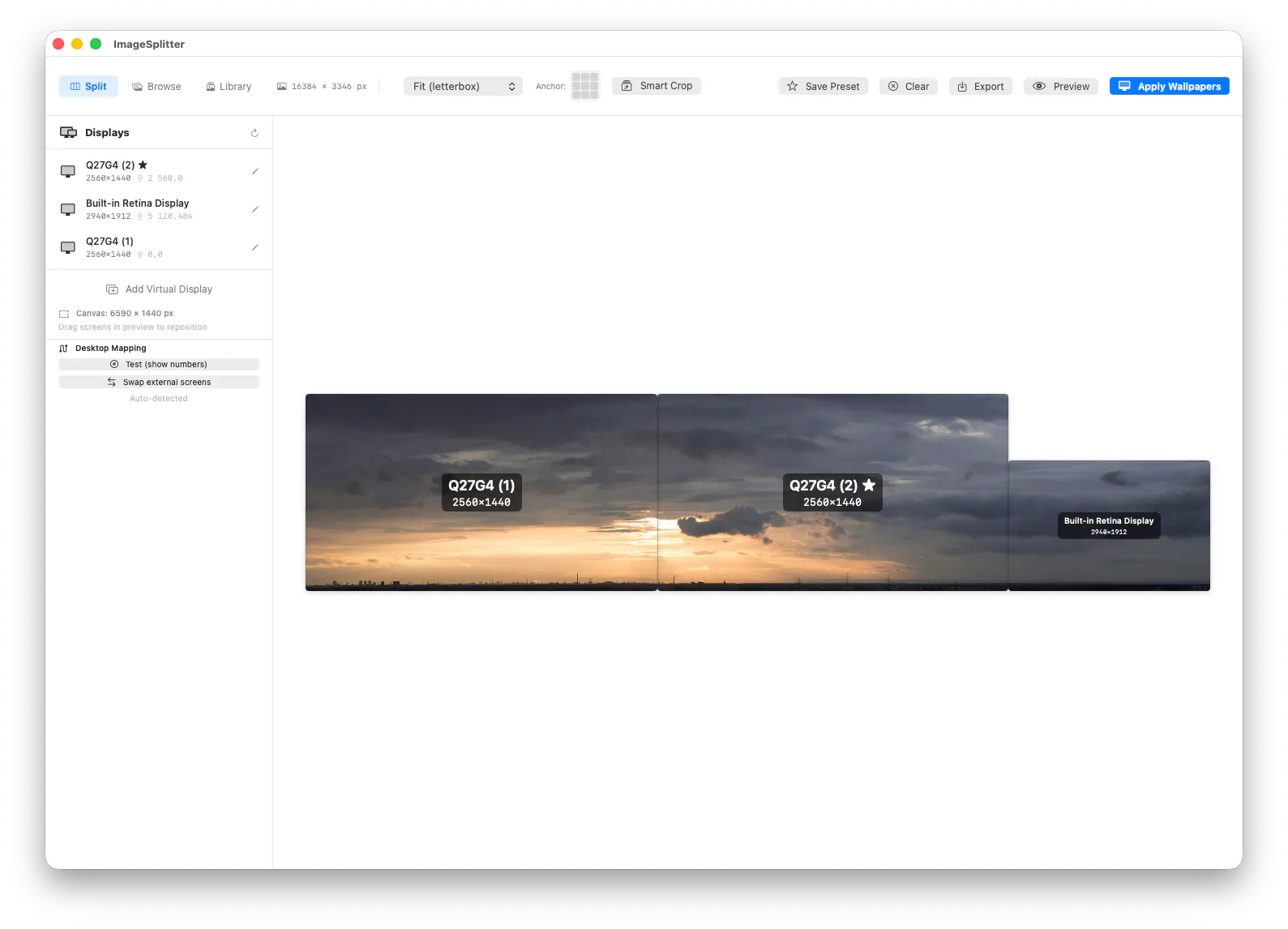
Smart Crop wallpapers for multi-monitor Macs
WallSplit is a specialized utility designed for Mac users with multi-monitor setups who want stunning panoramic wallpapers that span across their screens seamlessly. It intelligently detects your monitor layout, resolution, position, and Retina scaling to slice any panoramic image into perfectly aligned wallpapers for each display. This automation eliminates the tedious trial-and-error process traditionally involved in setting up multi-monitor wallpapers, making it ideal for creatives, productivity enthusiasts, and anyone looking to enhance their desktop aesthetics. By automating the complex calculations, WallSplit ensures a flawless visual experience without requiring manual adjustments or technical expertise. Its focus on precision and ease of use makes it a standout tool for maximizing visual impact in multi-display environments.
Pros
- Automates the slicing and alignment of panoramic wallpapers for multi-monitor setups
- Detects screen layout, resolution, and Retina scaling automatically
- User-friendly with no manual math or trial-and-error required
- Enhances aesthetic appeal and productivity by providing perfectly aligned wallpapers
- Compatible with various monitor configurations and resolutions
Cons
- Limited to Mac users; not available for Windows or Linux
- Currently, no information on a free trial or free version
- Features primarily focused on wallpaper management, not broader display customization
Best for
- • Creating immersive panoramic desktop backgrounds for multi-monitor workstations
- • Designers and artists showcasing panoramic artwork across multiple screens
- • Enhancing productivity environments with visually appealing, seamless wallpapers
- • Personalizing multi-monitor setups for gaming or entertainment systems
Pricing: Likely offered as a paid application with a one-time purchase or subscription model, given its specialized functionality, though specific pricing details are not publicly available.

A modular development board built for agents
ESP-Mosaico is a modular development board designed specifically for AI agents and developers interested in bridging the gap between software intelligence and physical hardware. Powered by the powerful ESP32-S31 chip, it enables users to build, deploy, and test AI-driven physical devices with ease. Its modular architecture, featuring expandable modules and multi-unit tiling, offers flexibility for creating complex, multi-faceted hardware solutions. The platform's innovative features like Chat Coding and Vibe Coding provide intuitive, user-friendly ways to turn ideas into functional, real-world devices—making it ideal for developers, hobbyists, and researchers pushing the boundaries of AI hardware integration. What sets ESP-Mosaico apart is its focus on enabling AI agents to operate beyond software, into tangible environments. Its hardware-centric approach fosters rapid prototyping and iteration, empowering users to create smarter, more responsive physical systems. Whether for robotics, IoT projects, or experimental AI hardware, ESP-Mosaico offers a comprehensive, expandable platform that combines ease of use with powerful capabilities, opening new horizons for AI-driven hardware development.
Pros
- Modular and expandable design for versatile hardware configurations
- Built on the robust ESP32-S31 platform ensuring reliable performance
- User-friendly interfaces like Chat Coding and Vibe Coding simplify development
- Facilitates rapid prototyping and iteration for AI hardware projects
- Enables AI agents to interact with and control physical devices
Cons
- Limited publicly available information on detailed specifications and pricing
- May require technical expertise in hardware and firmware development
- Currently lacks a large community or extensive third-party integrations
Best for
- • Creating AI-powered robotics and autonomous machines
- • Developing IoT devices that leverage AI for smarter decision-making
- • Prototyping physical AI agents for research and experimentation
- • Educational projects to teach hardware-software integration with AI
Pricing: Pricing not verified