Tessar vs Sonnet 4.6
Side-by-side comparison of features, pros & cons, pricing, and community votes (2026).
🏆 Sonnet 4.6 leads with 744 upvotes
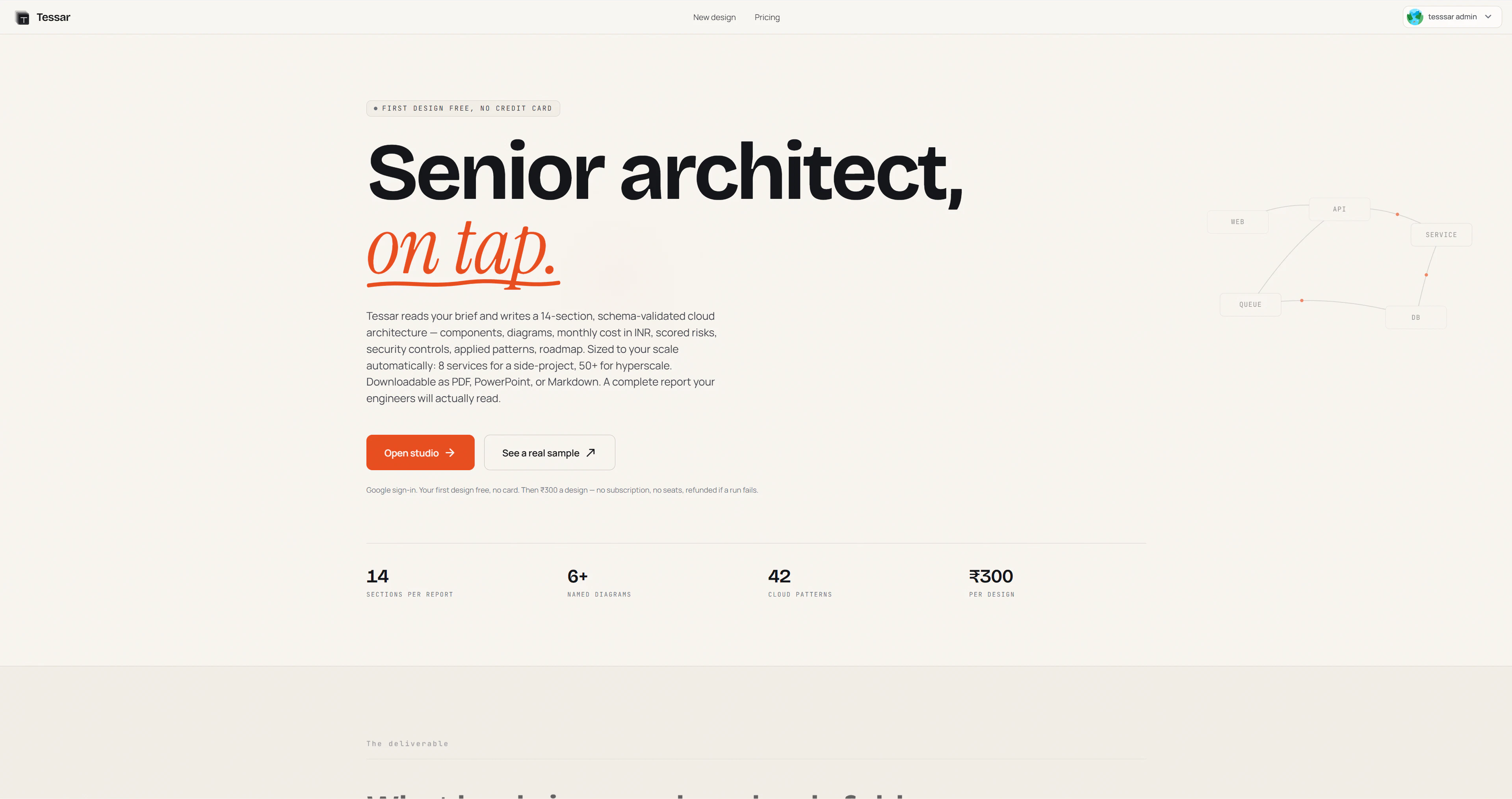
Generate & compare cloud architectures from a brief
Tessar is an innovative SaaS tool designed for developers, architects, and tech teams seeking rapid cloud architecture planning. By simply describing their system in plain English, users receive a comprehensive cloud architecture within approximately three minutes. Tessar generates detailed component diagrams, estimates monthly costs, assesses risks, and provides a strategic roadmap, streamlining the often complex process of cloud design. Notably, it can produce multiple competing architecture options side-by-side, comparing AWS, GCP, and Azure solutions, which helps teams make informed decisions quickly. Its user-friendly interface and automated generation make it especially valuable for startups, DevOps teams, and cloud consultants aiming to accelerate project planning and reduce design overhead.
Pros
- Speeds up the cloud architecture design process significantly
- Generates multiple competing options for better comparison
- Provides detailed cost estimates and risk assessments
- Supports multiple cloud providers (AWS, GCP, Azure)
- Easy to use, requiring only a plain English description
Cons
- Limited customization for very complex or niche architectures
- Functionality may depend on the clarity of user input
- First design is free, but subsequent features or extensive use may incur costs
Best for
- • Rapid prototyping of cloud architectures for startups
- • Comparing cloud provider options for a new project
- • Cost estimation and risk analysis during planning phases
- • Creating visual diagrams for stakeholder presentations
Pricing: Likely operates on a freemium model, offering a free initial design with paid plans for additional features or extensive use. Exact pricing details are not publicly specified but may involve tiered subscriptions based on project complexity or number of designs.

The most capable Sonnet model yet
Sonnet 4.6 is an advanced AI language model that excels across multiple domains including coding, knowledge work, long-context reasoning, and computer use. Its most notable feature is the 1 million token context window in beta, enabling it to process and generate highly complex and lengthy content with remarkable coherence. Positioned as a significant upgrade, Sonnet 4.6 approaches Opus-level intelligence at a more accessible price point, making it suitable for a wide range of professional and creative applications. Its improvements in computer use skills and agent planning make it a versatile tool for developers, knowledge workers, and AI enthusiasts seeking a powerful yet cost-effective solution. With strong benchmark performance and broad capabilities, Sonnet 4.6 stands out as a comprehensive AI assistant for complex tasks that require deep understanding and extended context.
Pros
- Exceptional long-context reasoning with 1M token window (beta)
- Broad improvement across coding, design, and computer use skills
- Approaches high-level AI performance at a practical price
- Versatile for multiple use cases including planning, knowledge work, and creative tasks
- Strong benchmark results indicating high reliability
Cons
- Beta feature (context window) may still have stability or usability issues
- Pricing details are not explicitly specified, which may influence affordability perceptions
- Potential learning curve for users unfamiliar with advanced AI models
Best for
- • Complex long-form content creation and editing
- • Coding assistance and software development workflows
- • Extended knowledge management and research projects
- • AI-powered agent planning and automation
Pricing: Likely operates on a subscription-based model with tiered plans, offering a balance between affordability and advanced capabilities. Exact pricing details are not publicly specified, but it is positioned as a cost-effective alternative to high-end models.