Supabase RLS Leak Demo vs Inspector
Side-by-side comparison of features, pros & cons, pricing, and community votes (2026).
🏆 Inspector leads with 621 upvotes
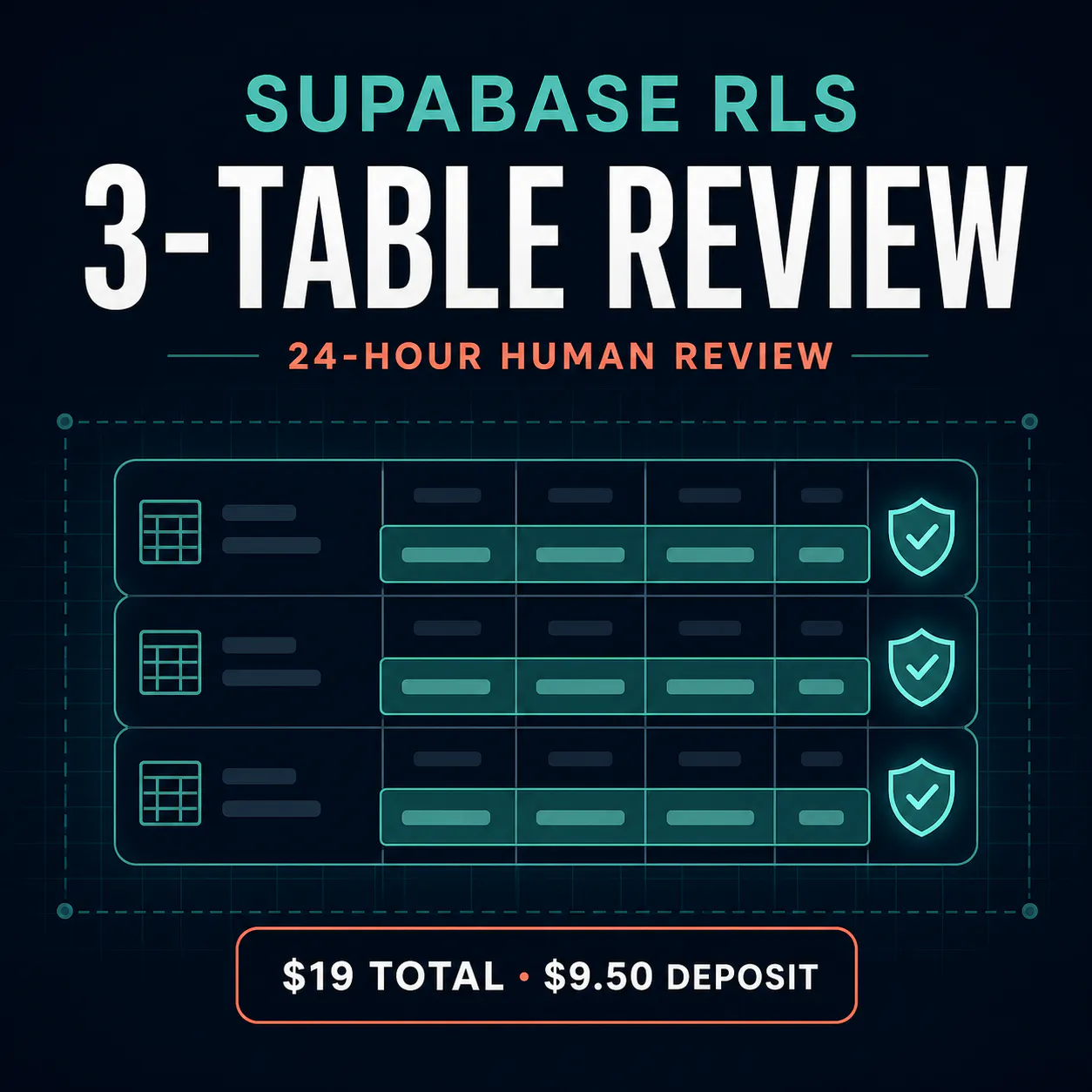
Reproduce a cross-tenant RLS leak and verify the fix
Supabase RLS Leak Demo is a focused, open-source testing tool designed for developers and founders working on multi-tenant applications. It provides a simple yet powerful fixture to simulate a cross-tenant Row-Level Security (RLS) leak in PostgreSQL, allowing users to verify whether their security policies are truly effective. By running a straightforward test suite with commands like 'npm ci && npm test', users can identify potential leaks and confirm their fixes—no need for Docker, cloud credentials, or production data. This makes it an excellent resource for teams committed to security and data integrity in multi-tenant SaaS platforms. The tool's unique value lies in its ability to demonstrate that a policy may appear correct but still harbor vulnerabilities, offering clear evidence before deploying to production.
Pros
- Simple setup with zero dependencies on Docker or cloud credentials
- Open-source and easy to run locally for immediate security testing
- Provides clear, reproducible evidence of security leaks and fixes
- Designed specifically for multi-tenant SaaS applications
- Helps teams validate security policies before deployment
Cons
- Limited to PostgreSQL and Supabase environments
- Primarily focused on RLS leak testing, not a comprehensive security suite
- Requires familiarity with SQL policies and testing practices
Best for
- • Testing and verifying multi-tenant data security policies
- • Demonstrating RLS vulnerabilities during security audits
- • Validating fixes for RLS leaks before production deployment
- • Educational tool for developers learning about RLS security
Pricing: Open source and free to use, with no costs involved. It is designed as a lightweight fixture for local testing and validation.

Figma for Claude Code
Inspector reimagines the design-to-code workflow by integrating visual editing directly with AI-powered code generation. Designed for developers, designers, and product teams, it allows users to click on UI elements within a design interface, make visual adjustments, and have those changes automatically reflected in the underlying codebase. The tool connects seamlessly with popular AI agents like Claude Code, Codex, and Cursor, streamlining the often tedious handoff process between design and development. Its unique approach eliminates the need for manual code edits or back-and-forth communication, enabling rapid prototyping and iteration. By bridging the gap between visual design and code, Inspector enhances productivity and fosters a more collaborative workflow, making it ideal for teams seeking to accelerate their development cycles with AI-powered precision.
Pros
- Intuitive visual interface for code adjustments
- Seamless integration with popular AI coding agents
- Reduces manual coding and design handoff time
- Supports rapid prototyping and iteration
- Streamlines collaboration between designers and developers
Cons
- May have limitations with complex UI components
- Dependent on AI accuracy, which can vary
- Learning curve for users unfamiliar with AI-assisted editing
Best for
- • Quick UI tweaks during product development
- • Design validation and iteration without extensive code changes
- • Bridging the gap between design and development teams
- • Rapid prototyping of new features
Pricing: Likely operates on a freemium model, offering basic features for free with paid plans providing additional integrations and advanced editing capabilities; exact pricing details are not publicly specified.