Supabase RLS Leak Demo vs Anything API
Side-by-side comparison of features, pros & cons, pricing, and community votes (2026).
🏆 Anything API leads with 672 upvotes
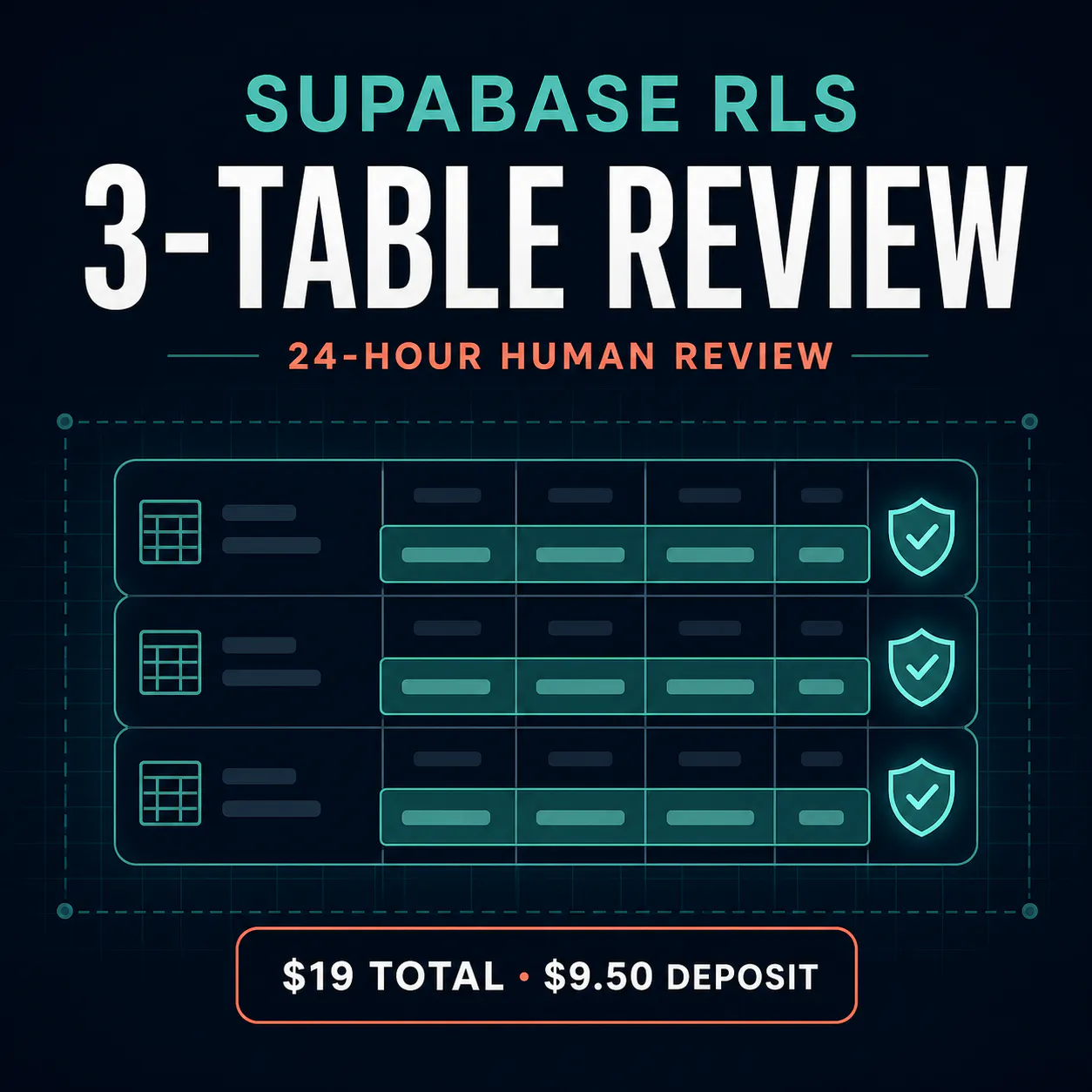
Reproduce a cross-tenant RLS leak and verify the fix
Supabase RLS Leak Demo is a focused, open-source testing tool designed for developers and founders working on multi-tenant applications. It provides a simple yet powerful fixture to simulate a cross-tenant Row-Level Security (RLS) leak in PostgreSQL, allowing users to verify whether their security policies are truly effective. By running a straightforward test suite with commands like 'npm ci && npm test', users can identify potential leaks and confirm their fixes—no need for Docker, cloud credentials, or production data. This makes it an excellent resource for teams committed to security and data integrity in multi-tenant SaaS platforms. The tool's unique value lies in its ability to demonstrate that a policy may appear correct but still harbor vulnerabilities, offering clear evidence before deploying to production.
Pros
- Simple setup with zero dependencies on Docker or cloud credentials
- Open-source and easy to run locally for immediate security testing
- Provides clear, reproducible evidence of security leaks and fixes
- Designed specifically for multi-tenant SaaS applications
- Helps teams validate security policies before deployment
Cons
- Limited to PostgreSQL and Supabase environments
- Primarily focused on RLS leak testing, not a comprehensive security suite
- Requires familiarity with SQL policies and testing practices
Best for
- • Testing and verifying multi-tenant data security policies
- • Demonstrating RLS vulnerabilities during security audits
- • Validating fixes for RLS leaks before production deployment
- • Educational tool for developers learning about RLS security
Pricing: Open source and free to use, with no costs involved. It is designed as a lightweight fixture for local testing and validation.

Any website. We deliver the API.
Anything API is an innovative platform that bridges the gap for websites lacking public APIs. It empowers users to convert their browser-based interactions into robust, production-ready APIs without extensive coding. By simply describing the task, users can have custom functions built that directly call the target website, enabling seamless integration and automation. These custom API endpoints can be deployed serverless, scheduled via Cron, or accessed through standard API calls, making it highly versatile for developers, automation enthusiasts, and businesses seeking to extend functionality of web services. Its unique approach of translating manual browser work into programmable endpoints distinguishes it from traditional API providers, offering a flexible solution for accessing data or automating tasks on virtually any website.
Pros
- Transforms any website into a custom API without coding
- Flexible deployment options including serverless and scheduled tasks
- User-friendly task description process simplifies API creation
- Supports automation and integration with existing systems
- Highly versatile for various web scraping and data extraction needs
Cons
- Limited details on pricing structure and plans
- Potential challenges with highly dynamic or complex websites
- Reliance on agent-generated functions may require occasional updates
Best for
- • Extracting data from websites lacking public APIs
- • Automating repetitive browser tasks through API calls
- • Building integrations for custom web workflows
- • Monitoring website changes or content updates
Pricing: Likely operates on a pay-as-you-go or subscription-based model, with possible tiered plans depending on usage volume and features. Specific pricing details are not publicly disclosed, suggesting a custom or variable pricing approach.