PostureGuard vs SKI
Side-by-side comparison of features, pros & cons, pricing, and community votes (2026).
🏆 SKI leads with 639 upvotes
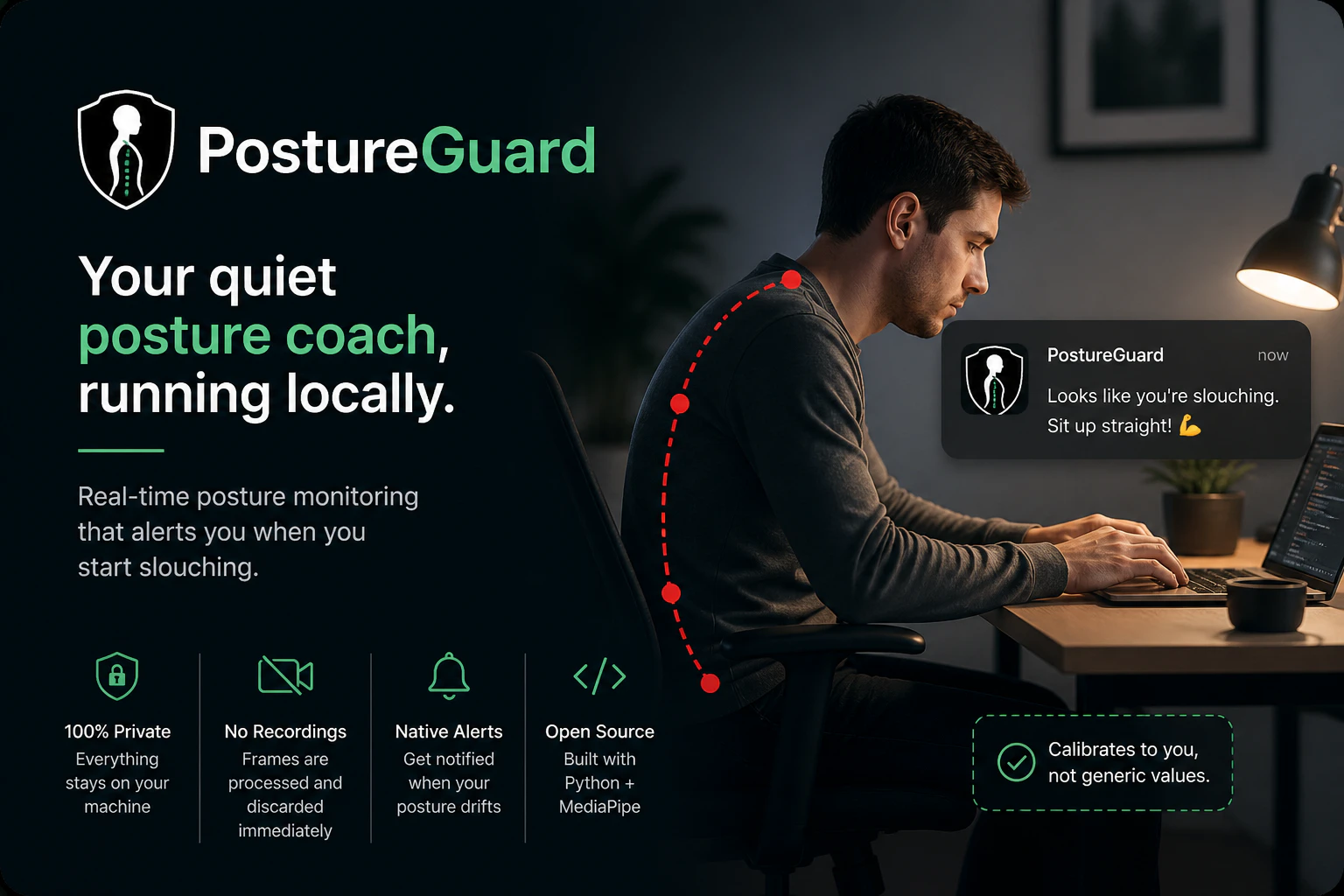
Your quiet posture coach, running locally
PostureGuard is a privacy-focused posture monitoring tool that helps users maintain proper ergonomics by leveraging their webcam locally. Unlike many health apps that rely on cloud processing or require account creation, PostureGuard runs entirely on the user's machine, ensuring data privacy and security. It uses Python and MediaPipe to analyze your posture in real-time, providing silent background monitoring with native OS notifications when slouching is detected. After a quick calibration, users can enjoy an unobtrusive way to improve their sitting habits during work or study sessions. Its open-source nature encourages transparency and customization, making it ideal for tech-savvy users who prioritize privacy and control. Whether you work long hours at a desk or want a simple posture reminder, PostureGuard offers an effective, lightweight solution that respects user privacy while promoting healthier habits.
Pros
- Privacy-centric with local processing and no cloud dependency
- Open-source and customizable for tech-savvy users
- Native OS notifications for seamless user experience
- Easy setup with quick calibration
- Lightweight and runs silently in the background
Cons
- Requires technical knowledge for customization or troubleshooting
- Limited to webcam-based posture detection, which may be less accurate in certain environments
- No advanced analytics or detailed reporting features
Best for
- • Reminding remote workers to maintain good posture during long work sessions
- • Students studying at a desk to prevent slouching and neck strain
- • Ergonomic training for new employees in an organization
- • Personal health improvement for posture correction
Pricing: Free and open source, with no paid plans or subscription fees.

Free voice coding for Claude Code, Codex and more
SKI is an innovative voice coding tool designed for developers and professionals who want to boost their productivity through natural language interaction. Unlike traditional dictation software, SKI offers a conversational experience where the AI responds out loud, functioning like a real teammate. This allows users to build code at the speed of their thoughts, whether they’re working solo or collaborating in meetings. Its ambient design sits unobtrusively on the desktop, accessible with a simple keystroke, making it easy to activate and use on both Mac and Windows systems. By integrating with AI models like Claude Code and Codex, SKI transforms voice commands into executable code seamlessly, offering a fresh approach to coding and command execution that minimizes interruptions and maximizes flow. It's particularly suited for developers, technical writers, and teams seeking an innovative way to streamline their coding and communication processes.
Pros
- Voice interaction that provides real-time spoken responses, enhancing conversational coding
- Easy to activate and use with a simple key press, sitting unobtrusively on the desktop
- Supports multiple AI models like Claude Code and Codex for versatile coding assistance
- Free to use, making it accessible for individuals and small teams
- Cross-platform compatibility with Mac and Windows
Cons
- Still relatively new, so integration and stability might vary
- Limited advanced customization options or enterprise features at this stage
- Dependent on local machine performance for optimal operation
Best for
- • Real-time voice coding during solo development sessions
- • Building code live during meetings or presentations
- • Assisting with brainstorming or debugging through spoken commands
- • Creating quick prototypes or scripts without switching context
Pricing: Likely offers a free, open access model given its emphasis on being free and desktop-based, with potential plans for premium features or enterprise solutions in the future.