PostureGuard vs Inspector
Side-by-side comparison of features, pros & cons, pricing, and community votes (2026).
🏆 Inspector leads with 621 upvotes
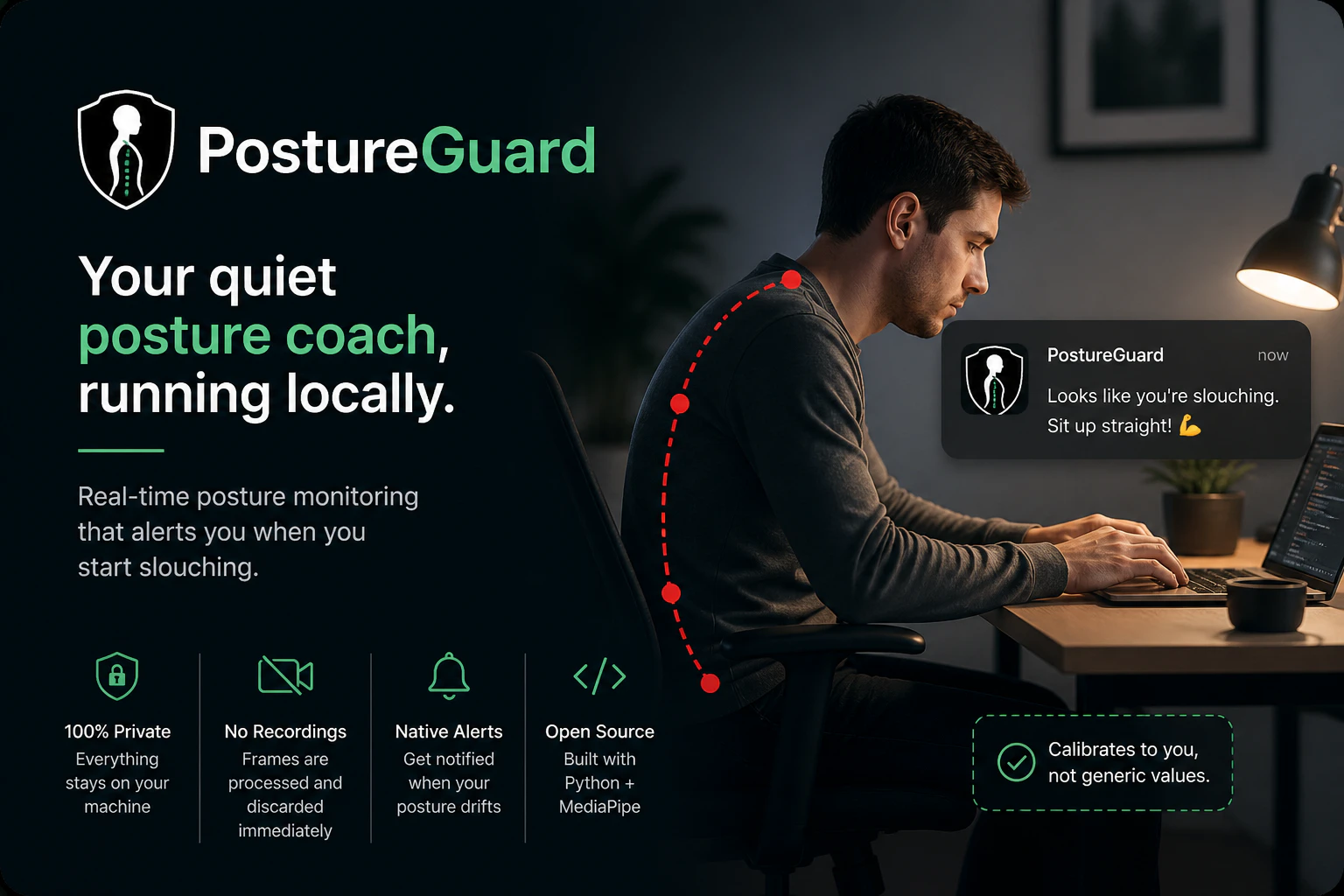
Your quiet posture coach, running locally
PostureGuard is a privacy-focused posture monitoring tool that helps users maintain proper ergonomics by leveraging their webcam locally. Unlike many health apps that rely on cloud processing or require account creation, PostureGuard runs entirely on the user's machine, ensuring data privacy and security. It uses Python and MediaPipe to analyze your posture in real-time, providing silent background monitoring with native OS notifications when slouching is detected. After a quick calibration, users can enjoy an unobtrusive way to improve their sitting habits during work or study sessions. Its open-source nature encourages transparency and customization, making it ideal for tech-savvy users who prioritize privacy and control. Whether you work long hours at a desk or want a simple posture reminder, PostureGuard offers an effective, lightweight solution that respects user privacy while promoting healthier habits.
Pros
- Privacy-centric with local processing and no cloud dependency
- Open-source and customizable for tech-savvy users
- Native OS notifications for seamless user experience
- Easy setup with quick calibration
- Lightweight and runs silently in the background
Cons
- Requires technical knowledge for customization or troubleshooting
- Limited to webcam-based posture detection, which may be less accurate in certain environments
- No advanced analytics or detailed reporting features
Best for
- • Reminding remote workers to maintain good posture during long work sessions
- • Students studying at a desk to prevent slouching and neck strain
- • Ergonomic training for new employees in an organization
- • Personal health improvement for posture correction
Pricing: Free and open source, with no paid plans or subscription fees.

Figma for Claude Code
Inspector reimagines the design-to-code workflow by integrating visual editing directly with AI-powered code generation. Designed for developers, designers, and product teams, it allows users to click on UI elements within a design interface, make visual adjustments, and have those changes automatically reflected in the underlying codebase. The tool connects seamlessly with popular AI agents like Claude Code, Codex, and Cursor, streamlining the often tedious handoff process between design and development. Its unique approach eliminates the need for manual code edits or back-and-forth communication, enabling rapid prototyping and iteration. By bridging the gap between visual design and code, Inspector enhances productivity and fosters a more collaborative workflow, making it ideal for teams seeking to accelerate their development cycles with AI-powered precision.
Pros
- Intuitive visual interface for code adjustments
- Seamless integration with popular AI coding agents
- Reduces manual coding and design handoff time
- Supports rapid prototyping and iteration
- Streamlines collaboration between designers and developers
Cons
- May have limitations with complex UI components
- Dependent on AI accuracy, which can vary
- Learning curve for users unfamiliar with AI-assisted editing
Best for
- • Quick UI tweaks during product development
- • Design validation and iteration without extensive code changes
- • Bridging the gap between design and development teams
- • Rapid prototyping of new features
Pricing: Likely operates on a freemium model, offering basic features for free with paid plans providing additional integrations and advanced editing capabilities; exact pricing details are not publicly specified.