Pluria vs Claude Opus 5.5
Side-by-side comparison of features, pros & cons, pricing, and community votes (2026).
🏆 Claude Opus 5.5 leads with 355 upvotes
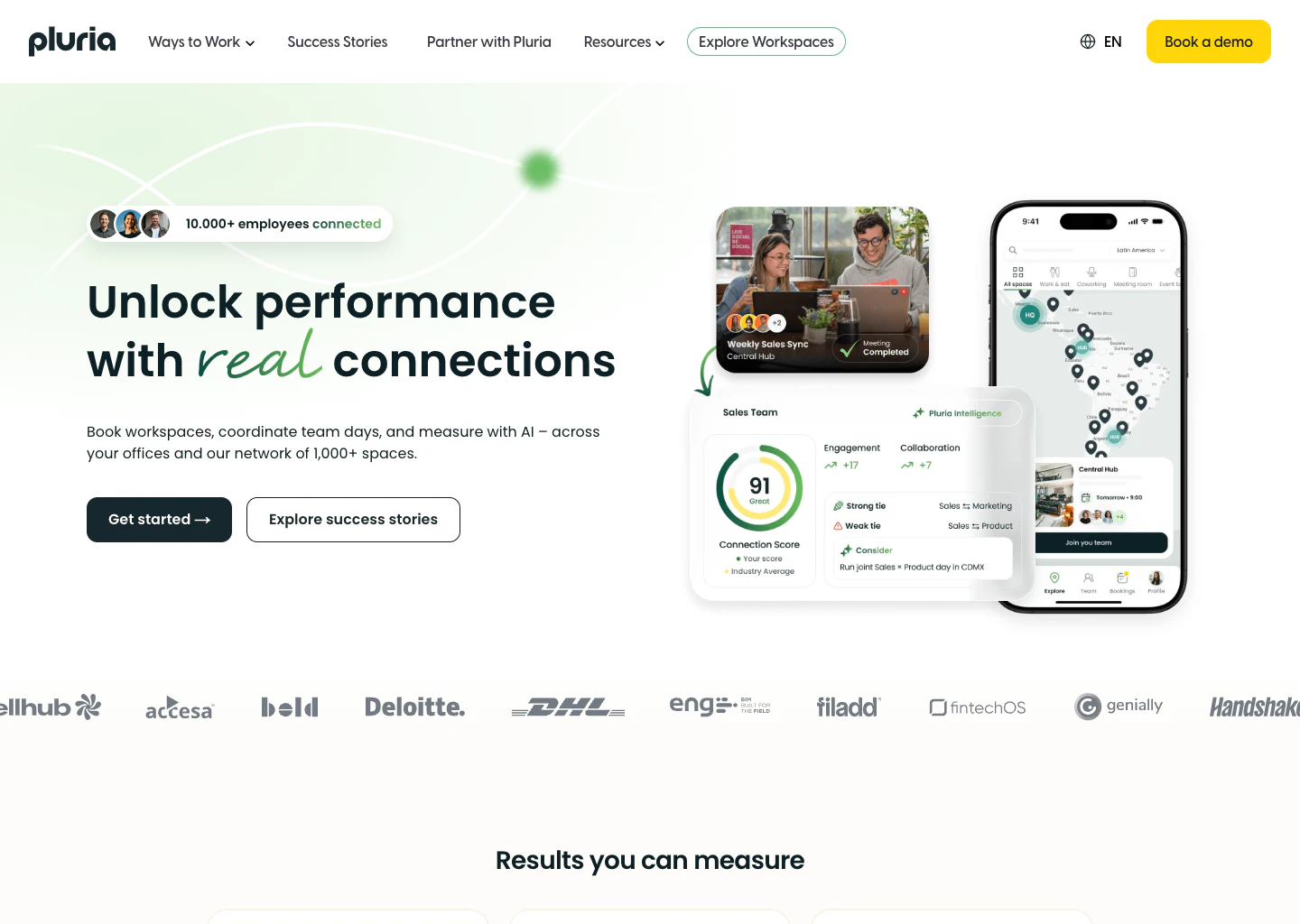
Workspace booking for hybrid teams
Pluria is a dynamic workspace booking platform designed for hybrid teams operating across Latin America. It simplifies the process of reserving coworking spaces, coordinating in-person workdays, and monitoring workplace utilization, helping distributed teams optimize their hybrid work arrangements. With its user-friendly interface, Pluria enables team members to seamlessly find and book available workspaces, fostering collaboration and flexibility. Its focus on Latin America makes it particularly valuable for companies expanding or operating within this region, offering localized options and insights that enhance the hybrid work experience. What sets Pluria apart is its comprehensive approach to managing workspace logistics, promoting efficient use of resources, and supporting organizational flexibility in a rapidly evolving work landscape. Overall, it is an innovative solution for teams seeking to streamline their hybrid workplace management while maintaining productivity and connectivity.
Pros
- Simplifies coworking space reservation and management
- Supports coordination of in-person workdays for distributed teams
- Provides workplace usage tracking and analytics
- Region-specific focus on Latin America enhances local relevance
- User-friendly interface improves adoption and usability
Cons
- Limited international availability outside Latin America
- Features may be less comprehensive compared to larger enterprise solutions
- Pricing details are not publicly specified, which could impact budgeting decisions
Best for
- • Managing coworking space bookings for remote or hybrid teams
- • Coordinating scheduled in-office days to optimize team collaboration
- • Tracking and analyzing workspace utilization to optimize costs
- • Supporting regional teams with localized workspace options
Pricing: Likely operates on a subscription-based model, potentially with tiered plans that include a free trial or basic features, with paid plans offering advanced management and analytics capabilities. Exact pricing details are not publicly available.

Anthropic's first model in their new Claude 5.5 family
Claude Opus 5.5, developed by Anthropic, marks a significant advancement in AI-driven coding and knowledge work tools. As the first model in the new Claude 5.5 family, it emphasizes enhanced performance, clearer communication, and increased safety measures. Designed for developers, enterprise teams, and knowledge workers, Claude Opus 5.5 offers a more cost-effective solution—up to 40% cheaper than its predecessor, Opus 5—while maintaining high-quality outputs. Its capabilities are tailored to facilitate complex coding tasks, streamline information processing, and support safe, reliable AI interactions. This makes it an ideal choice for teams seeking a robust, scalable AI assistant that can handle a variety of technical and knowledge-based tasks efficiently.
Pros
- Major performance improvements over previous models
- Clearer and more effective communication capabilities
- Enhanced safety features for responsible AI usage
- Significant cost reduction (40%) on typical workloads
- Optimized for agentic coding and knowledge work
Cons
- Limited user feedback available (votes are currently 0)
- Potential learning curve for new users unfamiliar with Anthropic's models
- Specific integration options and API details are not provided
Best for
- • Assisting developers with coding and debugging tasks
- • Automating knowledge extraction and summarization
- • Supporting safe AI-driven decision-making processes
- • Enhancing customer support with AI-powered chatbots
Pricing: Pricing not verified