Mugiwara Security vs Supernova
Side-by-side comparison of features, pros & cons, pricing, and community votes (2026).
🏆 Supernova leads with 333 upvotes
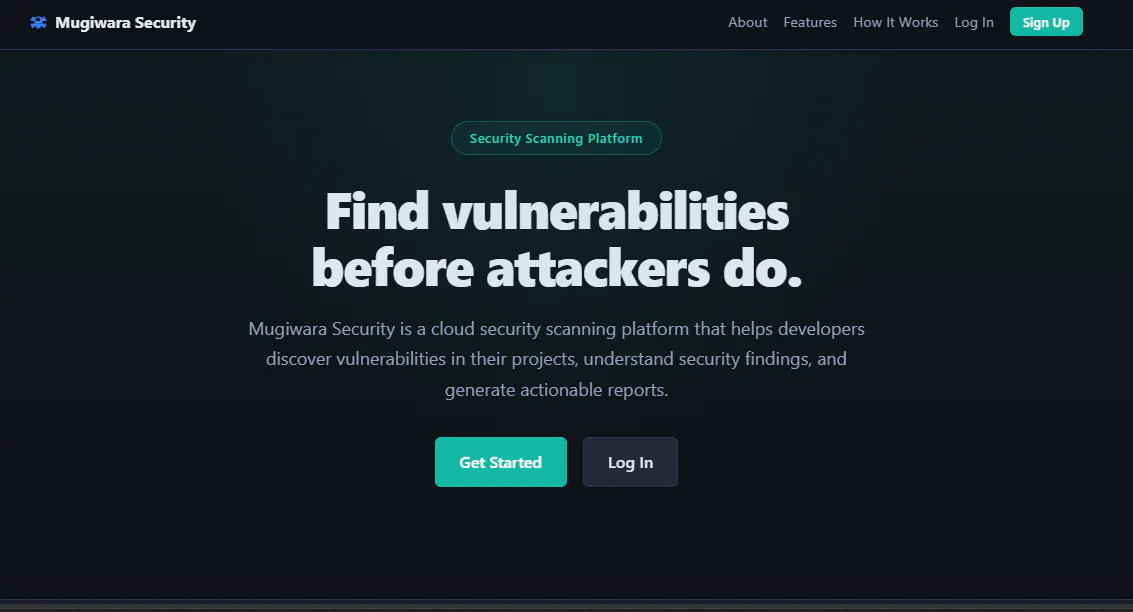
Proves vulnerabilities before reporting them.
Mugiwara Security is a cutting-edge vulnerability testing tool designed to differentiate itself from traditional scanners by providing verified proof-of-concept exploits. Unlike conventional solutions that flag suspicious activity without confirmation, Mugiwara generates actual exploits, executes them in isolated containers, and verifies if the attack is successful before marking a vulnerability as confirmed. This approach ensures that security teams focus only on genuine issues, reducing false positives and streamlining remediation efforts. Its innovative use of AI for patching verified vulnerabilities and re-testing further enhances its effectiveness. Developed primarily for developers and security professionals, Mugiwara emphasizes local execution, ensuring that sensitive code never leaves the user's machine, making it a secure choice for internal testing and development environments. Currently in V0 with injection classes in Python, it invites user feedback to improve its capabilities and reduce false positives, positioning itself as a proactive and trustworthy security tool.
Pros
- Provides verified exploits, reducing false positives
- Runs entirely locally, ensuring data privacy and security
- Automates patching and re-verification using AI
- Focuses on proof-of-concept validation rather than mere detection
- User feedback-driven development approach
Cons
- Currently in early V0 stage with limited functionalities
- Focuses primarily on injection classes in Python, limiting scope
- May require technical expertise to interpret and utilize effectively
Best for
- • Verifying the validity of vulnerabilities flagged by other scanners
- • Automated testing of web application security through proof-of-concept exploits
- • Secure internal vulnerability assessments without data leaving the machine
- • Continuous integration pipelines for automated security validation
Pricing: Pricing not verified

All your data in Claude and Codex
Supernova is a powerful data integration and AI analysis platform designed for startups and data-driven teams. It connects seamlessly with popular business tools like Stripe, HubSpot, and PostgreSQL, enabling users to quickly access and analyze live data without relying on traditional BI stacks or extensive engineering support. By integrating directly with AI models such as Claude and Codex, Supernova allows anyone in a team to ask complex questions, investigate performance metrics, and perform deep data analyses effortlessly. Its user-friendly approach democratizes data insights, making advanced analytics accessible to non-technical users while maintaining the flexibility needed for sophisticated investigations. This tool is especially valuable for startups seeking rapid insights into revenue, pipeline, customer behavior, and operational metrics, all within the familiar environment of AI-powered interfaces.
Pros
- Easy integration with over 30 popular apps and data sources
- Empowers non-technical team members to perform complex analysis
- Leverages advanced AI models for natural language querying and insights
- Reduces dependency on engineering resources and traditional BI tools
- Real-time data connectivity for up-to-date insights
Cons
- Limited information on pricing and plans available publicly
- May require some setup time to connect multiple data sources
- Potential learning curve for users unfamiliar with AI-powered querying
Best for
- • Analyzing real-time revenue and sales pipeline performance
- • Investigating customer engagement and retention metrics
- • Performing operational analysis without heavy engineering involvement
- • Generating ad-hoc reports using natural language questions
Pricing: Likely operates on a subscription-based model with tiered plans, possibly including a freemium option, but specific pricing details are not publicly available. It appears targeted at startups and small teams seeking accessible data analysis tools.