Mugiwara Security vs Dex
Side-by-side comparison of features, pros & cons, pricing, and community votes (2026).
🏆 Dex leads with 335 upvotes
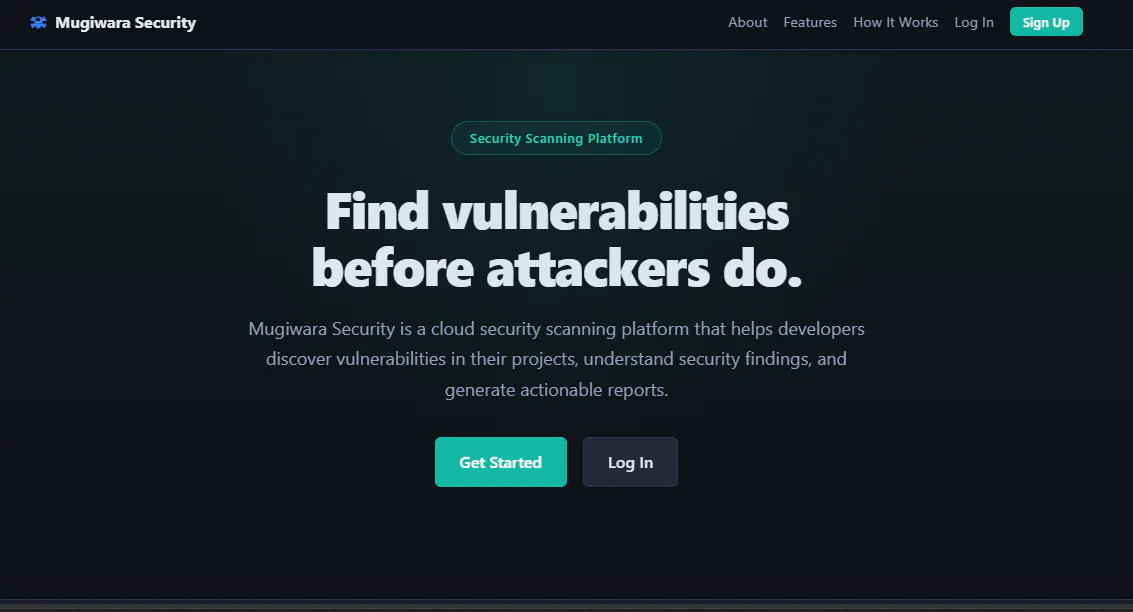
Proves vulnerabilities before reporting them.
Mugiwara Security is a cutting-edge vulnerability testing tool designed to differentiate itself from traditional scanners by providing verified proof-of-concept exploits. Unlike conventional solutions that flag suspicious activity without confirmation, Mugiwara generates actual exploits, executes them in isolated containers, and verifies if the attack is successful before marking a vulnerability as confirmed. This approach ensures that security teams focus only on genuine issues, reducing false positives and streamlining remediation efforts. Its innovative use of AI for patching verified vulnerabilities and re-testing further enhances its effectiveness. Developed primarily for developers and security professionals, Mugiwara emphasizes local execution, ensuring that sensitive code never leaves the user's machine, making it a secure choice for internal testing and development environments. Currently in V0 with injection classes in Python, it invites user feedback to improve its capabilities and reduce false positives, positioning itself as a proactive and trustworthy security tool.
Pros
- Provides verified exploits, reducing false positives
- Runs entirely locally, ensuring data privacy and security
- Automates patching and re-verification using AI
- Focuses on proof-of-concept validation rather than mere detection
- User feedback-driven development approach
Cons
- Currently in early V0 stage with limited functionalities
- Focuses primarily on injection classes in Python, limiting scope
- May require technical expertise to interpret and utilize effectively
Best for
- • Verifying the validity of vulnerabilities flagged by other scanners
- • Automated testing of web application security through proof-of-concept exploits
- • Secure internal vulnerability assessments without data leaving the machine
- • Continuous integration pipelines for automated security validation
Pricing: Pricing not verified

Ask your data. Get answers and next steps.
Dex is an innovative AI-powered data analyst designed specifically for founders and business leaders who want to unlock insights from their data without complex queries or technical expertise. By seamlessly connecting to various data sources such as databases, spreadsheets, or BI tools, Dex allows users to ask questions in plain English and receive instant, understandable answers. What sets Dex apart is its ability to interpret natural language queries and deliver not just insights but also actionable next steps based on the data analysis. This makes data-driven decision-making faster, more accessible, and more intuitive for non-technical users, empowering startups and small teams to leverage their data effectively. With its user-friendly interface and intelligent recommendations, Dex transforms raw data into strategic insights effortlessly.
Pros
- Natural language query support makes data analysis accessible to non-technical users
- Instant, actionable insights save time and improve decision-making
- Easy integration with multiple data sources including databases and BI tools
- Enhances productivity by simplifying complex data analysis tasks
- User-friendly interface suitable for startup founders and small teams
Cons
- Limited advanced analytical features for power users
- Potentially high dependency on data quality and integration setups
- Pricing details are not clearly specified, which may impact budgeting decisions
Best for
- • Quickly answering business questions from sales or marketing data
- • Generating insights from financial spreadsheets without manual analysis
- • Monitoring key performance metrics in real-time
- • Identifying trends and anomalies in operational data
Pricing: Likely follows a subscription-based model with tiered plans, possibly including a free trial or freemium option. Exact pricing details are not specified, but the service targets startups and small teams, suggesting affordable plans for early-stage businesses.