Mugiwara Security vs Atlas.new
Side-by-side comparison of features, pros & cons, pricing, and community votes (2026).
🏆 Atlas.new leads with 536 upvotes
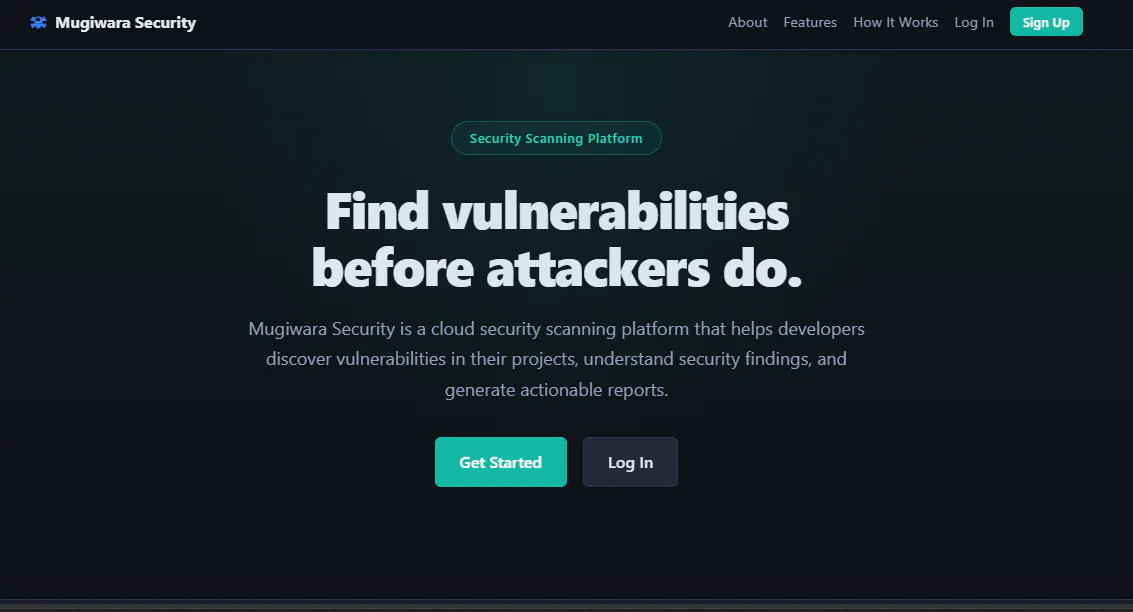
Proves vulnerabilities before reporting them.
Mugiwara Security is a cutting-edge vulnerability testing tool designed to differentiate itself from traditional scanners by providing verified proof-of-concept exploits. Unlike conventional solutions that flag suspicious activity without confirmation, Mugiwara generates actual exploits, executes them in isolated containers, and verifies if the attack is successful before marking a vulnerability as confirmed. This approach ensures that security teams focus only on genuine issues, reducing false positives and streamlining remediation efforts. Its innovative use of AI for patching verified vulnerabilities and re-testing further enhances its effectiveness. Developed primarily for developers and security professionals, Mugiwara emphasizes local execution, ensuring that sensitive code never leaves the user's machine, making it a secure choice for internal testing and development environments. Currently in V0 with injection classes in Python, it invites user feedback to improve its capabilities and reduce false positives, positioning itself as a proactive and trustworthy security tool.
Pros
- Provides verified exploits, reducing false positives
- Runs entirely locally, ensuring data privacy and security
- Automates patching and re-verification using AI
- Focuses on proof-of-concept validation rather than mere detection
- User feedback-driven development approach
Cons
- Currently in early V0 stage with limited functionalities
- Focuses primarily on injection classes in Python, limiting scope
- May require technical expertise to interpret and utilize effectively
Best for
- • Verifying the validity of vulnerabilities flagged by other scanners
- • Automated testing of web application security through proof-of-concept exploits
- • Secure internal vulnerability assessments without data leaving the machine
- • Continuous integration pipelines for automated security validation
Pricing: Pricing not verified

The AI agent for maps and spatial data
Atlas.new is an innovative SaaS platform designed to simplify the creation, analysis, and deployment of maps and spatial data. Leveraging AI technology, it enables users—regardless of GIS expertise—to build detailed maps, perform complex spatial analysis, and develop custom spatial applications with ease. Its user-friendly interface and AI-driven automation make spatial data accessible to a broad audience, from data scientists to product managers. By removing traditional barriers associated with GIS software, Atlas.new empowers teams to harness geographic insights quickly and efficiently, making it a valuable tool for businesses and developers seeking to integrate spatial intelligence into their workflows. Its community-driven approach, demonstrated by strong ProductHunt votes, underscores its growing popularity and effectiveness in democratizing geospatial data handling.
Pros
- No specialized GIS skills required, making it accessible to a broad user base
- AI-powered automation simplifies complex spatial analysis
- Intuitive interface facilitates quick map creation and customization
- Supports building and deploying spatial apps seamlessly
- Strong community support with notable user engagement
Cons
- May have limitations for highly advanced GIS professionals seeking in-depth tools
- Pricing details are not explicitly clear, which could affect budget planning
- Dependent on cloud infrastructure, potentially raising data privacy concerns for sensitive projects
Best for
- • Creating interactive maps for marketing and customer engagement
- • Performing spatial analysis for urban planning and development
- • Building location-based services and features into apps
- • Visualizing demographic or environmental data for research
Pricing: Likely follows a freemium model with free access to basic features and paid plans offering advanced capabilities, larger data limits, or enterprise options. Exact pricing details are not specified but are expected to start around a moderate monthly fee.