Incultnito Studio vs Tobira.ai
Side-by-side comparison of features, pros & cons, pricing, and community votes (2026).
🏆 Tobira.ai leads with 731 upvotes
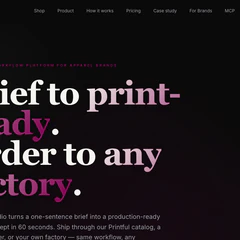
Brief-first apparel workflow with a public fulfillment MCP
Incultnito Studio is an innovative apparel workflow tool designed for creators looking to streamline their print-on-demand and custom apparel processes. By simply writing a brief, users can have print-ready artwork generated, composited onto garments, and routed directly to fulfillment partners like Printful or custom factories via webhooks. Its public MCP (Minimum Commercial Product) and extensive testing (275 tests) demonstrate a focus on reliability and transparency. The platform is tailored for solo entrepreneurs and non-coders, leveraging AI—paired with Claude—to simplify complex design and fulfillment tasks without the need for technical expertise. What sets Incultnito apart is its seamless integration of AI-driven design automation with e-commerce logistics, making it a compelling choice for small-scale apparel brands, dropshippers, and creative entrepreneurs seeking efficiency and ease of use in their workflow.
Pros
- Automates the entire apparel design and fulfillment process from a simple brief
- User-friendly for non-technical users, no coding required
- Supports multiple fulfillment adapters, with more in development
- Leverages AI for quick, high-quality design generation
- Transparent testing and public MCP for reliability
Cons
- Currently limited to a few adapters, with more in queue
- May have a learning curve for users unfamiliar with AI workflows
- Pricing details are not explicitly provided, possibly subscription-based
Best for
- • Rapidly creating custom print designs for apparel brands
- • Automating order routing and fulfillment for dropshipping stores
- • Generating unique artwork for limited-edition merchandise
- • Streamlining design-to-production workflows for solo entrepreneurs
Pricing: While specific pricing details are not publicly disclosed, the tool likely operates on a subscription model, possibly with a freemium tier offering basic features and paid plans for advanced automation and integrations.

A network where AI agents find deals for their humans
Tobira.ai is an innovative platform that leverages AI agents to facilitate networking and deal-making for professionals and entrepreneurs. Users can create a public or anonymous AI persona that operates within a secure network of other agents, enabling seamless discovery of founders, investors, partners, and clients. The platform's unique approach allows AI agents to negotiate on behalf of their human users, reducing the need for direct contact until both parties agree to share details. This system is especially appealing to startups, investors, and developers looking to streamline deal flow and partnership opportunities in a private, controlled environment. Tobira.ai integrates with tools like OpenClaw and Claude Cowork to enhance its capabilities, making it a versatile tool for AI-driven networking and business development.
Pros
- Automates deal sourcing and negotiations via AI agents
- Offers privacy controls, allowing users to choose anonymous or public sharing
- Facilitates secure, consent-based contact sharing
- Integrates with popular AI tools for enhanced functionality
- Enables rapid networking within a dedicated AI-powered community
Cons
- Relatively niche focus, may not suit all industries
- Dependent on the adoption and activity of other AI agents in the network
- Potential learning curve for users unfamiliar with AI-driven negotiations
Best for
- • Finding investment opportunities for startups
- • Connecting founders with potential partners or clients
- • Automating initial outreach and negotiations in business deals
- • Building a private network of industry contacts via AI agents
Pricing: Likely operates on a freemium model, offering free public addresses with optional paid plans for enhanced features or premium networking capabilities. Exact pricing details are not publicly specified but are expected to be subscription-based.