GitCity vs Superset
Side-by-side comparison of features, pros & cons, pricing, and community votes (2026).
🏆 Superset leads with 552 upvotes
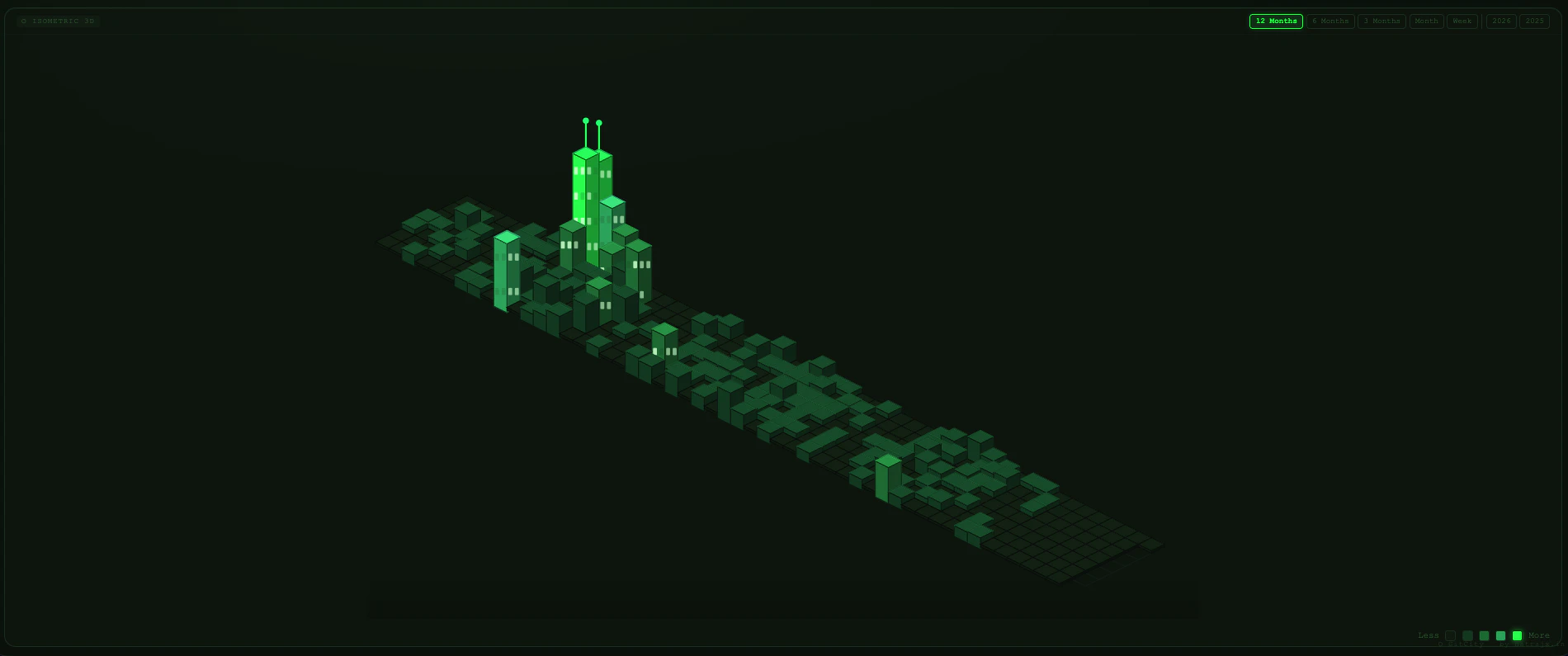
Your GitHub contributions as 3D city you can drive through
GitCity offers a creative and engaging way for developers to visualize their GitHub activity as an interactive 3D cityscape. By transforming commits into buildings, the tool provides a unique visual representation of coding consistency and project growth. Users can explore their contribution history in a novel isometric view, and switch to simulation mode to drive through their personalized city, making the experience both fun and insightful. With themes like Matrix, Noir, Aurora, Ocean, Gold, and Ice, GitCity caters to a variety of aesthetic preferences, enhancing the immersive experience. Its simplicity—no login required, just entering a GitHub username—ensures quick and easy access for anyone interested in a playful visualization of their coding habits. As an open-source project, GitCity appeals to developers who enjoy blending creativity with data, making it a standout among developer tools and GitHub visualization options.
Pros
- Unique and creative visualization of GitHub contributions
- No login required, easy to use with just a username
- Multiple themes for personalized aesthetics
- Driveable city simulation adds an interactive element
- Open source, free to use and customize
Cons
- Limited to GitHub activity; may not suit all data visualization needs
- Primarily a novelty tool, not for in-depth analytics
- Performance may vary with very large contribution histories
Best for
- • Motivating developers to maintain consistent contribution habits
- • Showcasing GitHub activity in portfolio or presentations
- • Educational demonstrations of version control engagement
- • Creative projects or art installations based on code activity
Pricing: Free and open source, with no paid tiers or subscription costs.

Run an army of Claude Code, Codex, etc. on your machine
Superset is an innovative IDE designed to supercharge developer productivity by enabling the seamless integration and management of multiple AI coding agents like Claude, Codex, and others. It allows developers to run several agents simultaneously without the typical overhead of context switching, each within its own sandbox environment to prevent interference. With its centralized dashboard, users can monitor all ongoing tasks, receive notifications for updates, and review changes efficiently using an integrated diff viewer. This setup significantly accelerates workflows, reduces frustration, and helps teams ship features faster. Ideal for AI developers, machine learning engineers, and advanced programmers, Superset transforms the coding process into a more organized, efficient, and collaborative experience, making complex multi-agent projects manageable and scalable.
Pros
- Enables running multiple AI coding agents simultaneously without interference
- Sandboxed environment ensures task isolation and stability
- Centralized monitoring and notification system improves workflow management
- Built-in diff viewer accelerates review and debugging
- Enhances productivity by reducing context switching overhead
Cons
- May require a steep learning curve for new users unfamiliar with multi-agent setups
- Limited details on pricing and licensing, potentially costly at scale
- Dependence on AI agents might introduce variability in output quality
Best for
- • Automated code generation and review
- • Multi-agent debugging and testing workflows
- • Rapid prototyping with various AI assistants
- • Managing complex AI-driven projects with multiple tasks
Pricing: Likely follows a freemium model with basic features available for free and premium plans offering expanded agent support and advanced monitoring, starting around $20-$50/month, though exact details are not publicly specified.