ETLFunnel Community Edition v1.1.0 vs Inspector
Side-by-side comparison of features, pros & cons, pricing, and community votes (2026).
🏆 Inspector leads with 621 upvotes
Data pipelines as code — self-hosted, zero black boxes
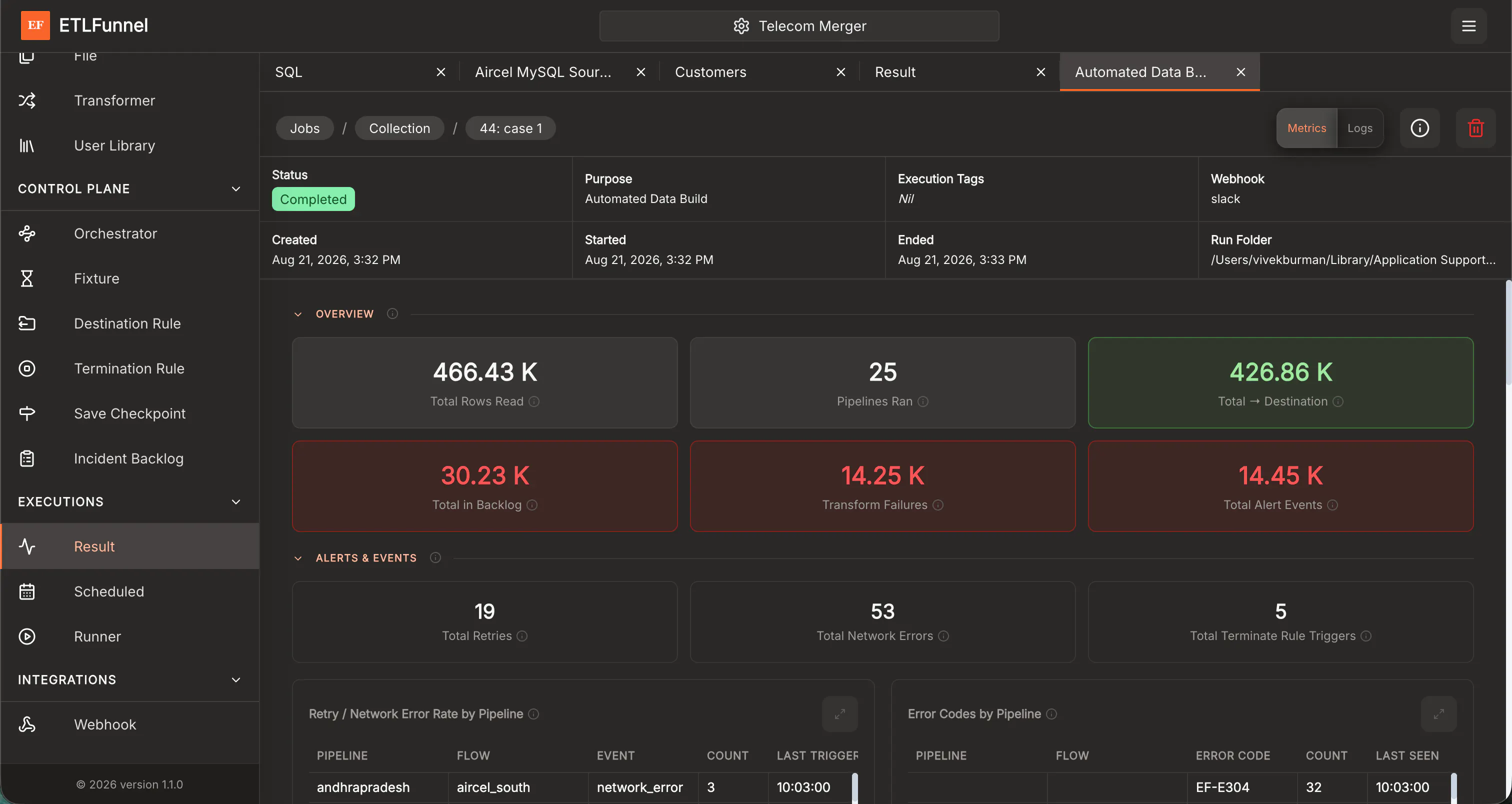
ETLFunnel Community Edition v1.1.0 is a powerful, code-first ETL platform designed for data engineers and developers who prefer building data pipelines through code rather than visual interfaces. Built in Go, it allows users to write, deploy, and manage data workflows with full control over their infrastructure, whether on local machines or on-premises servers via Docker. Its self-hosted nature ensures no vendor lock-in, providing transparency and security for sensitive data projects. The latest version introduces an in-app dashboard for monitoring run health and throughput, along with expanded connector support including Avro and Parquet formats, and webhook alerts for Slack and Teams, enhancing observability and collaboration. ETLFunnel’s focus on self-hosting, combined with its orchestration and auto-scaling features, makes it ideal for organizations seeking a customizable, scalable, and transparent data pipeline solution that adheres to best practices in software engineering and data management.
Pros
- Self-hosted with full control over infrastructure and data
- Code-first approach enables flexible, customizable pipelines
- Built-in orchestration and auto-scaling for scalability
- Enhanced observability with in-app dashboard and real-time monitoring
- Supports a wide range of connectors including Avro and Parquet
Cons
- Requires familiarity with programming and command-line tools
- Lack of a visual interface may pose a learning curve for non-developers
- Community edition may have limited enterprise features
Best for
- • Building custom data pipelines for analytics and reporting
- • Migrating from vendor lock-in to a self-managed ETL solution
- • Processing large datasets with support for modern formats like Parquet
- • Implementing real-time data monitoring and alerting systems
Pricing: Pricing not verified

Figma for Claude Code
Inspector reimagines the design-to-code workflow by integrating visual editing directly with AI-powered code generation. Designed for developers, designers, and product teams, it allows users to click on UI elements within a design interface, make visual adjustments, and have those changes automatically reflected in the underlying codebase. The tool connects seamlessly with popular AI agents like Claude Code, Codex, and Cursor, streamlining the often tedious handoff process between design and development. Its unique approach eliminates the need for manual code edits or back-and-forth communication, enabling rapid prototyping and iteration. By bridging the gap between visual design and code, Inspector enhances productivity and fosters a more collaborative workflow, making it ideal for teams seeking to accelerate their development cycles with AI-powered precision.
Pros
- Intuitive visual interface for code adjustments
- Seamless integration with popular AI coding agents
- Reduces manual coding and design handoff time
- Supports rapid prototyping and iteration
- Streamlines collaboration between designers and developers
Cons
- May have limitations with complex UI components
- Dependent on AI accuracy, which can vary
- Learning curve for users unfamiliar with AI-assisted editing
Best for
- • Quick UI tweaks during product development
- • Design validation and iteration without extensive code changes
- • Bridging the gap between design and development teams
- • Rapid prototyping of new features
Pricing: Likely operates on a freemium model, offering basic features for free with paid plans providing additional integrations and advanced editing capabilities; exact pricing details are not publicly specified.