ETLFunnel Community Edition v1.1.0 vs Claude Code Review
Side-by-side comparison of features, pros & cons, pricing, and community votes (2026).
🏆 Claude Code Review leads with 562 upvotes
Data pipelines as code — self-hosted, zero black boxes
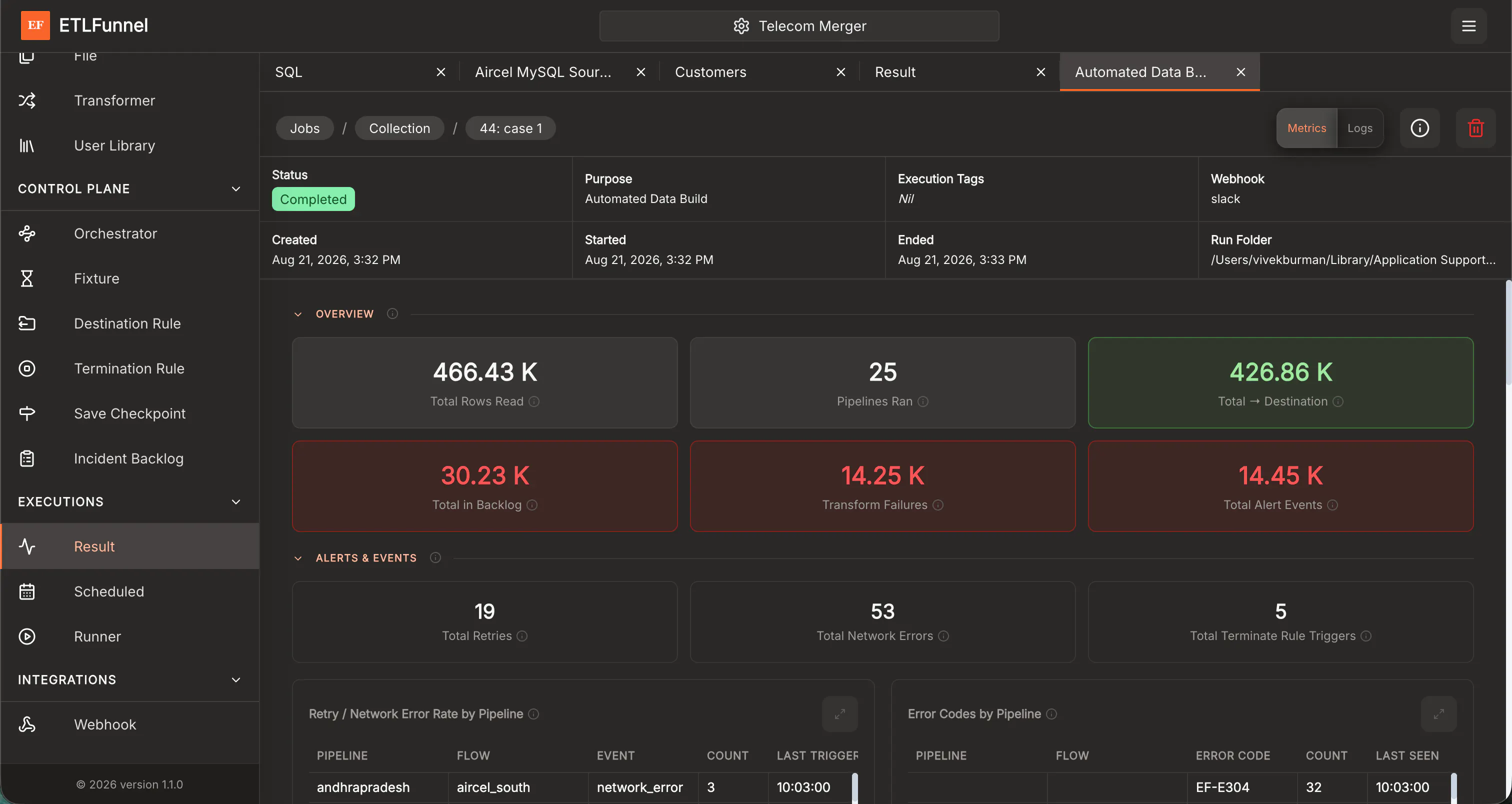
ETLFunnel Community Edition v1.1.0 is a powerful, code-first ETL platform designed for data engineers and developers who prefer building data pipelines through code rather than visual interfaces. Built in Go, it allows users to write, deploy, and manage data workflows with full control over their infrastructure, whether on local machines or on-premises servers via Docker. Its self-hosted nature ensures no vendor lock-in, providing transparency and security for sensitive data projects. The latest version introduces an in-app dashboard for monitoring run health and throughput, along with expanded connector support including Avro and Parquet formats, and webhook alerts for Slack and Teams, enhancing observability and collaboration. ETLFunnel’s focus on self-hosting, combined with its orchestration and auto-scaling features, makes it ideal for organizations seeking a customizable, scalable, and transparent data pipeline solution that adheres to best practices in software engineering and data management.
Pros
- Self-hosted with full control over infrastructure and data
- Code-first approach enables flexible, customizable pipelines
- Built-in orchestration and auto-scaling for scalability
- Enhanced observability with in-app dashboard and real-time monitoring
- Supports a wide range of connectors including Avro and Parquet
Cons
- Requires familiarity with programming and command-line tools
- Lack of a visual interface may pose a learning curve for non-developers
- Community edition may have limited enterprise features
Best for
- • Building custom data pipelines for analytics and reporting
- • Migrating from vendor lock-in to a self-managed ETL solution
- • Processing large datasets with support for modern formats like Parquet
- • Implementing real-time data monitoring and alerting systems
Pricing: Pricing not verified

Multi-agent review catching bugs early in AI-generated code
Claude Code Review is an advanced AI-powered tool designed to enhance the quality and security of AI-generated code through multi-agent analysis. It dispatches a team of AI agents to scrutinize every pull request, identifying bugs, security vulnerabilities, and hidden logic flaws that might be overlooked by conventional reviews. This proactive approach ensures that code is thoroughly vetted before reaching production, reducing costly errors and improving overall reliability. Currently available in research preview for Team and Enterprise plans, Claude Code Review appeals to development teams seeking an intelligent, automated layer of code quality assurance. Its ability to verify findings helps minimize false positives, making feedback more actionable and trustworthy. By integrating this tool into their workflow, organizations can benefit from faster, more accurate code reviews, ultimately accelerating development cycles while maintaining high standards of security and performance.
Pros
- Multi-agent analysis provides comprehensive code review coverage
- Detects bugs, security issues, and hidden logic flaws effectively
- Reduces false positives through verification of findings
- Automates early bug detection, saving time in development
- Suitable for teams seeking AI-enhanced development workflows
Cons
- Currently in research preview, so may have limited availability or stability
- Primarily designed for AI-generated code, so less effective for human-written code
- Pricing details are not explicitly disclosed, possibly costly for small teams
Best for
- • Automated review of pull requests in AI-driven development projects
- • Early detection of security vulnerabilities in codebases
- • Reducing manual review workload for large development teams
- • Ensuring code quality in fast-paced CI/CD pipelines
Pricing: Likely operates on a subscription-based model with tiered plans for Teams and Enterprises; specific pricing details are not publicly available, but it is probably geared towards medium to large organizations with a focus on security and quality assurance.