DayPin vs Open-source Notion alternative.
Side-by-side comparison of features, pros & cons, pricing, and community votes (2026).
🏆 DayPin leads with 0 upvotes
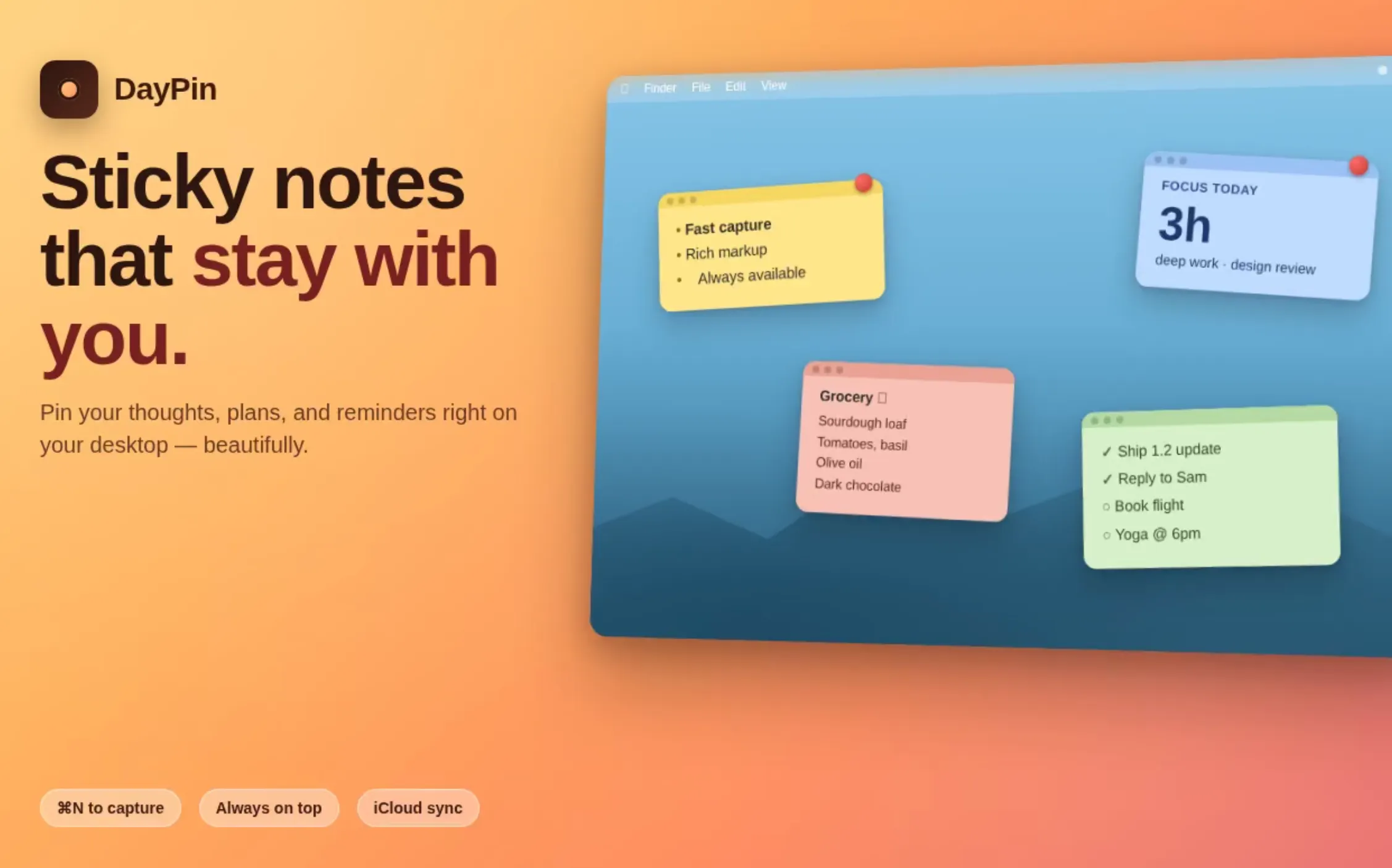
Native menu-bar sticky notes for Mac — offline, $3 Pro
DayPin is a lightweight, native Mac application that transforms your desktop into an organized space for sticky notes. Designed with simplicity and privacy in mind, it allows users to quickly jot down ideas, reminders, or important information using a seamless hotkey or menu bar icon. Built with SwiftUI, it offers a sleek, native experience without requiring an account or telemetry, ensuring your notes remain private. The app supports rich Markdown formatting, including bold, italics, headings, checklists, code blocks, and quotes, all within an intuitive WYSIWYG interface. Its customizable features, such as color options, opacity control, and hotkey customization, make note-taking flexible and personalized. The Pro version, priced at a one-time $3 fee, unlocks unlimited pins, cloud sync via iCloud, export options, search functionality, and advanced tools, making it ideal for power users and professionals seeking a simple yet powerful notes solution on their Mac.
Pros
- Native macOS application with a smooth SwiftUI interface
- Offline functionality with no account or telemetry required
- Rich Markdown support with WYSIWYG editing
- Customizable hotkeys, colors, and opacity
- Affordable one-time Pro upgrade for enhanced features
Cons
- Limited advanced organizational features compared to full note-taking apps
- No collaborative or real-time editing capabilities
- Pro version requires a one-time payment, which may be a barrier for some users
Best for
- • Quickly capturing and organizing ideas during meetings
- • Creating visual reminders for important tasks
- • Maintaining project or context-specific notes on the desktop
- • Using checklists for task tracking
Pricing: DayPin offers a free version with basic features. The Pro version is a one-time purchase of $3, unlocking unlimited notes, cloud sync, export options, and advanced tools. This straightforward pricing model makes it accessible for casual users and professionals alike.

Local-first Notion alternative with a Claude Code brain
This open-source, local-first Notion alternative offers a privacy-centric solution for users seeking a powerful note-taking and workspace management tool without relying on cloud services. It leverages plain Markdown notes that sync peer-to-peer, ensuring data remains on the user’s device. Unique to this platform is the integration of a Company Brain powered by Claude Code, which can answer queries across your entire workspace, either through an existing Claude Code setup or a fully local model. With end-to-end encryption and no requirement for accounts, it appeals to privacy-conscious individuals and teams who value control over their data. Its open-source nature and GitHub availability foster community development and customization, making it suitable for tech-savvy users who want a flexible, secure workspace that respects their privacy.
Pros
- Strong privacy focus with peer-to-peer sync and end-to-end encryption
- No cloud dependencies or account requirements
- Open-source and customizable via GitHub
- Integrates AI-powered answering through Claude Code or local models
- Plain Markdown notes promote simplicity and flexibility
Cons
- May require technical expertise for setup and customization
- Limited out-of-the-box collaborative features compared to cloud-based tools
- Potentially less polished user interface for non-technical users
Best for
- • Personal knowledge management without cloud dependencies
- • Secure note-taking for privacy-conscious teams
- • Local project documentation and task tracking
- • AI-assisted workspace querying for research or development projects
Pricing: Open-source and free to use. Potential costs associated with hosting or running local models if applicable, but no subscription fees are inherent to the tool itself.