Cubicle vs Stitch 2.0 by Google
Side-by-side comparison of features, pros & cons, pricing, and community votes (2026).
🏆 Stitch 2.0 by Google leads with 841 upvotes
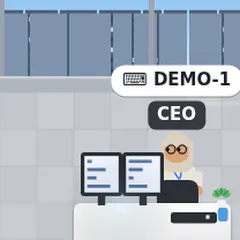
A live office for your AI agents, read-only by design
Cubicle offers a unique live office environment for monitoring and interacting with AI agents such as Claude Code, Codex, Gemini CLI, and Paperclip. Designed with a read-only by default approach, it allows users to observe these agents as they work, raising hands or lining up at your virtual desk when they need input. The platform features a KPI board for task tracking, Telegram alerts for agent queries, and customizable themes including pixel or HD options, along with real face avatars and branding options like your logo. Its minimal setup requires just one command (npx) and no dependencies, making it accessible and easy to deploy. Cubicle emphasizes transparency and real-time visibility into AI processes, making it ideal for teams managing multiple AI agents or workflows. Its optional Telegram reply feature adds a layer of interaction without risking unintended modifications, ensuring a safe and controlled environment for AI monitoring.
Pros
- Real-time live monitoring of multiple AI agents in a unified workspace
- Highly customizable with themes, branding, and alert integrations
- Zero dependencies with simple setup via npx command
- Read-only design ensures safety and control over AI interactions
- Includes KPI tracking and task management features
Cons
- Limited direct interaction; primarily for observation
- Features may be overkill for users seeking basic AI monitoring
- No explicit pricing information available
Best for
- • Monitoring the performance of AI code agents during development
- • Managing multiple AI workflows in a collaborative environment
- • Providing real-time oversight for AI research projects
- • Training and onboarding teams on AI agent behavior
Pricing: Pricing not verified

Vibe design beautiful production-ready UI in seconds
Stitch 2.0 by Google is an innovative AI-native design tool that streamlines the creation of high-fidelity user interfaces. It empowers designers, developers, and product teams to generate beautiful, production-ready UI using natural language commands, voice, and context-aware agents. The platform supports designing across images, code, and text seamlessly within a single canvas, enabling users to iterate rapidly and produce prototypes instantly. Its integration of built-in design systems and the DESIGN.md format ensures consistency and efficiency, making the transition from idea to interface faster than ever. Ideal for teams seeking a smarter, more intuitive approach to UI design, Stitch 2.0 combines AI-driven automation with collaborative features to enhance productivity and creativity.
Pros
- AI-powered design generation for rapid prototyping
- Supports natural language, voice, and context-aware interactions
- Unified canvas for images, code, and text simplifies workflows
- Built-in design systems and DESIGN.md for consistency
- Fast iteration and collaboration features
Cons
- Relatively new with potential for ongoing feature development
- May require some learning curve for non-technical users
- Pricing details are not explicitly disclosed, which could impact budgeting
Best for
- • Rapid creation of UI prototypes for startups and product teams
- • Iterative design processes driven by natural language commands
- • Collaborative design sessions with remote teams
- • Maintaining design consistency across large projects
Pricing: Likely follows a freemium model with free tier options and paid plans starting around a moderate subscription fee, typical for AI-enhanced design tools. Exact pricing details are not publicly specified.