Collab vs Solid
Side-by-side comparison of features, pros & cons, pricing, and community votes (2026).
🏆 Solid leads with 466 upvotes
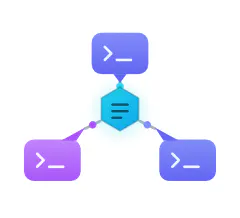
An hub that lets coding agents on different machines talk
Collab is an innovative hub designed to facilitate seamless communication between coding agents running on different machines or repositories. Traditionally, developers and AI agents manually copy and paste context, which can be time-consuming and error-prone. Collab streamlines this process by providing a self-hosted platform where agents can message each other, assign and claim tasks from a shared board, and transfer build artifacts in real time, leveraging Google's A2A protocol for efficient data exchange. Whether used across separate machines or within different repositories on the same machine, Collab enhances collaboration, automation, and productivity for development teams and AI workflows. Its real-time, automated communication model reduces manual overhead and accelerates project cycles, making it especially appealing for teams integrating AI agents into their development pipelines.
Pros
- Real-time communication between coding agents
- Supports task management and artifact sharing
- Self-hosted for privacy and customization
- Works across multiple machines and repositories
- Leverages Google's A2A protocol for efficient data transfer
Cons
- Requires self-hosting setup and maintenance
- Limited user interface details available
- No information on pricing or scalability
Best for
- • Automating AI agent collaboration across different developer environments
- • Streamlining multi-agent development workflows
- • Enabling real-time artifact sharing during continuous integration
- • Coordinating tasks between agents on different repositories
Pricing: Pricing not verified

Agents with their own computers, accounts, and budgets.
Solid is an innovative AI-driven platform that empowers autonomous agents to handle complex, long-term work tasks on behalf of individuals or teams. Unlike typical personal assistants, Solid agents operate independently by setting up their own physical machines, creating accounts, and managing budgets to execute workflows seamlessly. They interact with your apps via APIs or login credentials, building new solutions and resolving issues as they arise. This makes Solid ideal for organizations seeking to delegate substantial and ongoing projects without micromanagement, allowing users to focus on higher-level strategy while the agents handle operational details. Built for scalability and depth, Solid is suited for businesses that require reliable, autonomous support across various development and productivity tasks, offering a unique blend of automation, customization, and end-to-end management.
Pros
- Autonomous agents that handle complex, long-term projects independently
- Operates real machines, manages accounts, and budgets for full control
- Capable of building custom apps, automating workflows, and troubleshooting
- Reduces manual workload and enables teams to focus on strategic priorities
- Designed for scalable, enterprise-level automation
Cons
- Potential complexity in initial setup and onboarding
- Limited publicly available user feedback or case studies
- Requires trust in the autonomous agents to manage sensitive tasks
Best for
- • Automating large-scale data processing and integration tasks
- • Building and maintaining custom software solutions
- • Managing ongoing infrastructure and cloud service accounts
- • Automating repetitive business workflows
Pricing: Pricing not verified