CANSAT-GCS vs Unabyss for Claude
Side-by-side comparison of features, pros & cons, pricing, and community votes (2026).
🏆 Unabyss for Claude leads with 654 upvotes
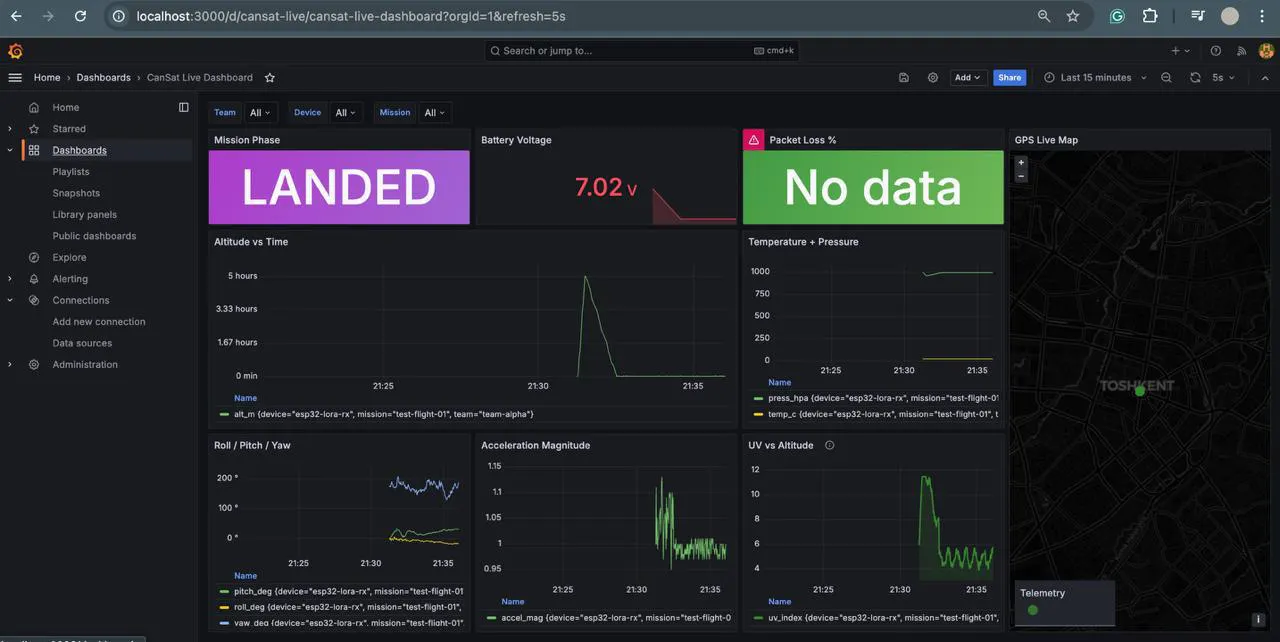
GCS for CanSat missions with local AI telemetry analysis
CANSAT-GCS is an open-source ground control station tailored specifically for CanSat competitions and small satellite projects. It integrates hardware components like ESP32 and LoRa for real-time telemetry transmission, with a Python-based backend validating data packets and storing them in InfluxDB. The system offers a comprehensive live dashboard via Grafana, displaying critical flight parameters such as altitude, orientation, GPS trail, link quality, and battery status. Its automation features include detecting launch, parachute deployment, and landing, and it even generates automatic post-flight reports. Designed by a student for students, CANSAT-GCS provides an accessible, full-stack solution for small satellite enthusiasts, combining hardware and software seamlessly for immersive telemetry analysis and mission control.
Pros
- Open-source and highly customizable for educational and hobbyist use
- Real-time telemetry with automated event detection and reporting
- Integrated hardware and software stack simplifies setup and operation
- Live dashboards with Grafana enhance data visualization and analysis
- Built-in support for CanSat-specific mission phases
Cons
- Requires some technical expertise to set up and configure
- Limited scalability for larger satellite projects
- Dependence on hardware components like ESP32 and LoRa may limit flexibility
Best for
- • Educational CanSat competitions and student projects
- • Small satellite telemetry data collection and analysis
- • Prototype testing for small-scale aerospace experiments
- • Real-time mission monitoring for hobbyist satellite launches
Pricing: As an open-source project, CANSAT-GCS is free to use, modify, and distribute, making it accessible for students and hobbyists. Hardware costs depend on the components used but are generally affordable.

Shared memory across all apps and LLMs. In Claude
Unabyss for Claude is a groundbreaking tool designed to enhance the capabilities of AI language models by offering shared memory across multiple applications and LLMs. It allows Claude to access and recall context from various sources like email, Google Drive, GitHub, Notion, and meeting recordings, creating a unified memory that improves AI interactions and productivity. Unlike traditional integrations that require manual wiring of each app, Unabyss automates the process, ensuring Claude stays updated with all relevant information in real-time. This results in more accurate, context-aware responses that truly understand your business and personal workflows. Perfect for teams and individuals seeking seamless AI collaboration, Unabyss makes AI smarter, more private, and portable by maintaining a persistent, secure memory foundation that follows users across different platforms and tools.
Pros
- Creates a unified, persistent memory for multiple AI tools and apps
- Automates integration process, saving setup time and effort
- Enhances AI contextual understanding for more accurate responses
- Supports privacy and data security with private memory storage
- Portable memory that follows users across platforms
Cons
- Potential complexity in setup for non-technical users
- Limited information on pricing and plans at this stage
- Dependence on third-party app integrations which may vary
Best for
- • Improving AI-driven customer support with contextual history
- • Enhancing project management with shared knowledge across tools
- • Streamlining developer workflows by syncing code repositories and notes
- • Personalized AI assistants that remember user preferences and history
Pricing: Likely operates on a freemium model with free access and paid plans that increase storage or feature limits, typical for SaaS productivity tools, though specific details are not yet publicly available.