Bling vs PIO
Side-by-side comparison of features, pros & cons, pricing, and community votes (2026).
🏆 PIO leads with 281 upvotes
Run enterprise hiring loops autonomously
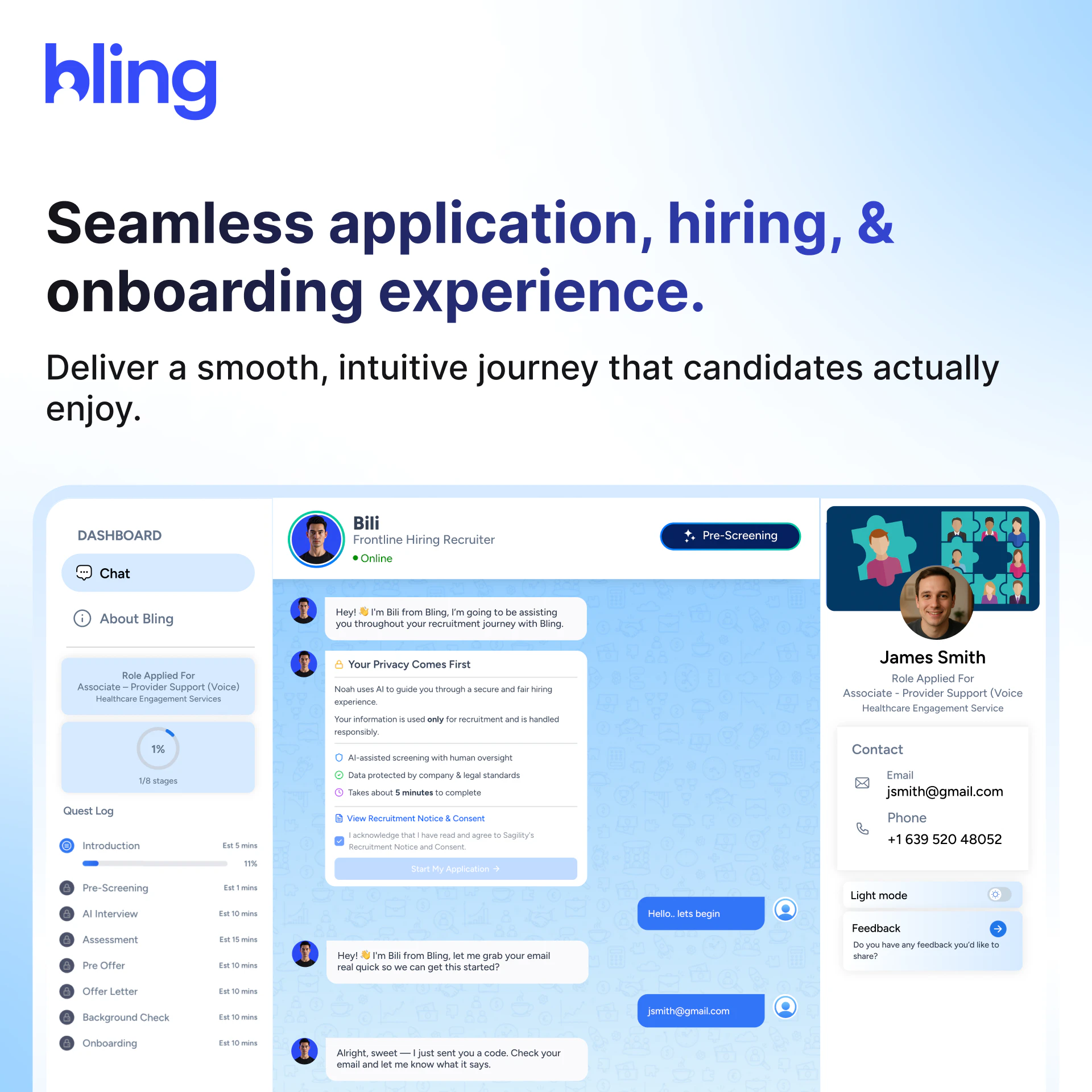
Bling is an innovative SaaS platform designed for large enterprises aiming to streamline and automate their frontline hiring processes. By leveraging advanced AI, Bling manages the entire recruitment cycle—from application receipt and screening to interviews, offer rollouts, background checks, and onboarding—without human intervention. Its AI system can engage with thousands of candidates simultaneously, moving them through the hiring pipeline in under 10 minutes, significantly reducing time-to-hire and operational costs. With over 1 million applicants processed, Bling continuously enhances its data and AI intelligence through its proprietary flywheel, making it increasingly efficient and accurate over time. Ideal for organizations with high-volume hiring needs, Bling offers a scalable, autonomous solution that ensures consistent hiring outcomes and reduces dependence on traditional recruitment methods.
Pros
- Automates the entire hiring process, saving time and resources
- Handles high-volume candidate engagement simultaneously
- Reduces time-to-hire to under 10 minutes
- Learns and improves continuously through its AI flywheel
- Owns the outcome, ensuring a person is hired
Cons
- Potentially limited customization for unique or niche roles
- May require integration efforts with existing HR systems
- Uncertain how it handles complex or nuanced candidate evaluations
Best for
- • High-volume frontline worker recruitment for retail, hospitality, or logistics
- • Automating mass hiring campaigns during peak seasons
- • Reducing administrative burden in large enterprise HR departments
- • Rapid onboarding of temporary or seasonal staff
Pricing: Pricing details are not publicly disclosed, but the platform likely offers a subscription-based model with tiered plans based on volume and features, suitable for large enterprises with high hiring demands.
Hire & pay talent in 150+ countries with AI agents
PIO is an innovative SaaS platform designed to streamline global talent management by simplifying hiring, onboarding, and paying employees or contractors across 150+ countries. Its standout feature is the integration of AI-powered agents that provide instant insights into payroll, compliance, and employment costs, eliminating the need for setting up local entities. Perfect for startups, remote teams, and international companies, PIO reduces administrative burdens and accelerates global expansion. Its comprehensive system combines payroll, compliance, and contractor management, making international hiring more accessible and less complex. The use of AI agents transforms traditional payroll processes into quick, conversational interactions, saving time and reducing errors. Overall, PIO empowers businesses to hire and pay talent effortlessly worldwide, with a focus on compliance and cost transparency.
Pros
- Global coverage in 150+ countries with no entity setup required
- AI-driven insights and instant answers for payroll and compliance questions
- Unified platform for hiring, onboarding, and payments
- Reduces administrative overhead and accelerates international hiring
- User-friendly interface with conversational AI capabilities
Cons
- Pricing details are not explicitly disclosed, which may be a concern for smaller businesses
- Dependence on AI accuracy; complex cases might require manual review
- Limited information on integrations with other HR or financial systems
Best for
- • Hiring remote talent across multiple countries without establishing local entities
- • Managing international contractor payments efficiently
- • Ensuring compliance with local labor laws and tax regulations
- • Cost analysis of hiring in different countries
Pricing: Likely operates on a subscription-based model with tiered plans, possibly including a free trial or basic tier. Exact pricing details are not publicly specified, but the platform's enterprise features suggest paid plans tailored to business size and needs.