BackdropKit vs Figma for Agents
Side-by-side comparison of features, pros & cons, pricing, and community votes (2026).
🏆 BackdropKit leads with 15 upvotes
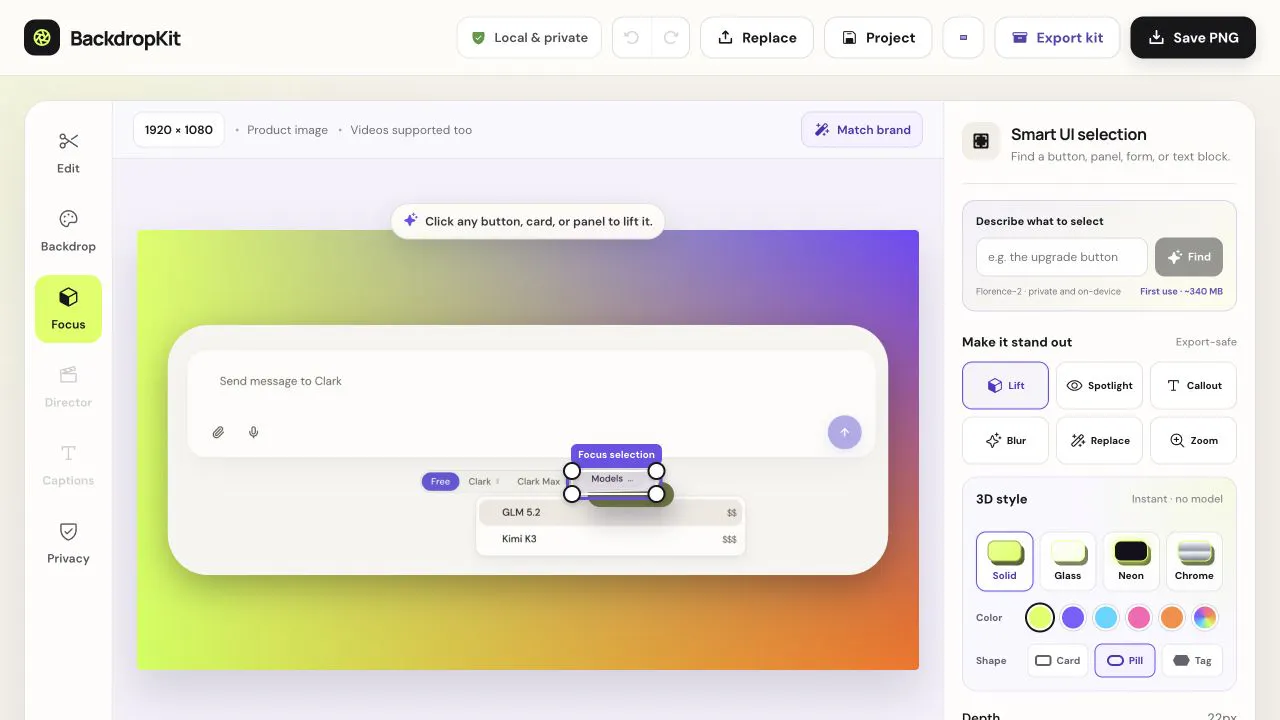
Launch-ready screenshots and demo videos private by design
BackdropKit is a privacy-focused tool designed for product teams, marketers, and developers who need to create polished launch materials without exposing sensitive information. It allows users to transform raw product screenshots or demo videos into comprehensive launch kits directly within their browser, ensuring privacy and security by not requiring uploads to external servers. Features include background generation or editing, UI spotlighting and callouts, redaction of confidential text, and export options optimized for various channels—such as images, videos, GIFs, thumbnails, and social media posts. Its emphasis on local processing makes it particularly appealing for teams prioritizing data privacy and watermark-free content creation. BackdropKit streamlines the process of preparing marketing assets, making it accessible and efficient for users who want professional results without complex editing software.
Pros
- Runs entirely locally in the browser, ensuring privacy and security
- All-in-one tool for editing, redacting, and exporting various media formats
- User-friendly interface ideal for non-experts in design or video editing
- Supports channel-specific exports like thumbnails, post copy, and alt text
- No watermarks and free to use
Cons
- Limited to browser-based editing, which might be less powerful than dedicated desktop tools
- May lack some advanced editing features found in professional software
- Newer tool with potentially limited integrations or ecosystem support
Best for
- • Creating privacy-compliant marketing screenshots and demo videos for product launches
- • Redacting sensitive data from product visuals before sharing publicly
- • Adding custom backgrounds and callouts to highlight UI features
- • Generating assets for social media posts, including thumbnails and GIFs
Pricing: Likely offers a freemium model with basic features available for free, with premium plans providing additional export options, backgrounds, or advanced editing tools. Specific pricing details are not publicly confirmed but are expected to be affordable for small to medium teams.

Design with AI agents, connected to your design system
Figma for Agents is an innovative design tool that integrates AI-driven agents with your existing design system to ensure consistency and brand adherence. Unlike traditional AI-generated designs that often overlook brand standards, this tool allows product teams to leverage AI while maintaining control over design fidelity. By connecting AI agents directly to Figma’s design environment and your design system, it streamlines the workflow between design and development, making it easier to produce brand-compliant, high-quality interfaces. This solution is ideal for teams looking to harness AI's automation capabilities without sacrificing the integrity of their visual identity, enhancing collaboration between designers and developers. Its unique approach bridges the gap between AI's efficiency and the precision of manual design, making it a valuable asset for modern product teams.
Pros
- Ensures AI-generated designs adhere to brand standards
- Seamless integration with Figma and existing design systems
- Improves collaboration between designers and developers
- Reduces manual adjustments and rework
- Speeds up design iteration cycles
Cons
- Currently limited to users familiar with Figma
- Potential learning curve for integrating AI agents
- Uncertain pricing details or tier options at launch
Best for
- • Automating the creation of UI components that stay consistent with brand guidelines
- • Enabling AI-assisted design updates that respect existing design systems
- • Bridging the gap between design and development workflows
- • Streamlining brand compliance checks during rapid prototyping
Pricing: Likely follows a subscription-based model, possibly with a free trial or limited free tier, with paid plans starting around $10-$20/month or more, depending on features and team size. Exact pricing details are not explicitly stated.