ASO Market Finder vs Migma AI
Side-by-side comparison of features, pros & cons, pricing, and community votes (2026).
🏆 Migma AI leads with 492 upvotes
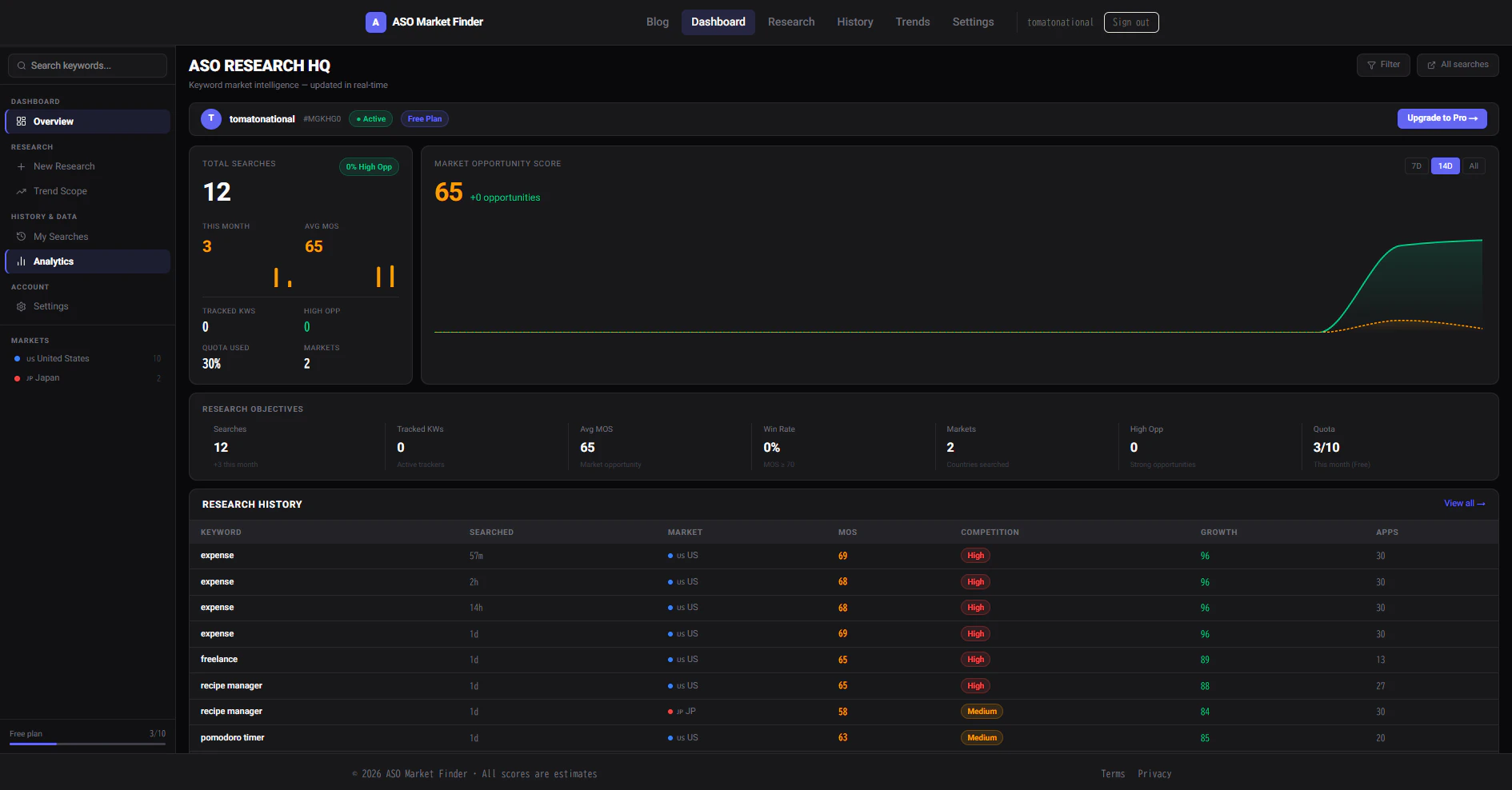
Research Google Play markets before you build your app
ASO Market Finder is a powerful tool designed for app developers and marketers aiming to optimize their Google Play app store presence. It provides real-time insights into keyword competition, demand signals, and market gaps across 23 countries. By offering a comprehensive Market Opportunity Score from 0 to 100, users can quickly assess whether a particular niche is worth pursuing, helping to avoid wasted months on saturated or irrelevant keywords. The tool is especially useful during early app planning stages, enabling data-driven decisions without the need for extensive manual research. With a user-friendly interface and limited free searches (10/month), ASO Market Finder makes it easier for developers to prioritize their app features and marketing efforts based on actual market demand and competition levels. It’s ideal for startups, indie developers, and marketing teams seeking an efficient way to validate app ideas before committing resources.
Pros
- Provides instant insights into competition and demand for keywords
- Includes a Market Opportunity Score for quick assessment
- Supports analysis across 23 countries for global market understanding
- Free tier with 10 searches per month, no credit card required
- Helps avoid building apps based on saturated or irrelevant keywords
Cons
- Limited to 10 free searches per month, which may be restrictive for heavy users
- Does not suggest specific app features or development ideas
- Focuses primarily on keyword and market analysis, not on app performance tracking
Best for
- • Validating app ideas before development to ensure market demand
- • Conducting keyword research for app store optimization (ASO)
- • Identifying niche opportunities and gaps in the Google Play store
- • Benchmarking competition levels across different countries
Pricing: Likely operates on a freemium model with a limited number of free searches (10/month), with paid plans possibly offering unlimited or higher search counts and additional features. Exact pricing details are not specified, but the free tier makes it accessible for initial testing.

AI runs your email marketing. Better with every send.
Migma AI is an innovative email marketing platform powered by artificial intelligence that automates and optimizes every aspect of campaign creation and management. It proactively generates comprehensive email campaigns based on your goals and key events, personalizes content, localizes messaging for diverse audiences, and ensures consistent rendering across various inboxes. The platform handles the technicalities of sending, managing preferences, and compliance, allowing marketers to focus on strategy. Its machine learning capabilities continuously learn from user interactions to improve campaign performance and drive revenue growth. Designed for marketers seeking smarter, more efficient email campaigns, Migma AI stands out by combining automation with deep personalization and adaptation, making it ideal for businesses aiming to scale their email marketing efforts with minimal manual effort.
Pros
- Automates full campaign creation based on user goals and events
- Personalizes and localizes emails for targeted audiences
- Ensures consistent rendering across different email clients
- Handles sending, preferences, and compliance seamlessly
- Learns from interactions to optimize future campaigns
Cons
- Relatively new, so long-term reliability and features may still be evolving
- Limited user reviews and case studies available currently
- Potential learning curve for new users unfamiliar with AI-driven tools
Best for
- • Automating large-scale email campaigns for e-commerce brands
- • Personalizing marketing messages for different regional audiences
- • A/B testing and optimizing email content based on AI insights
- • Managing complex email workflows triggered by user behavior
Pricing: Likely follows a subscription-based model with tiered plans depending on email volume and features, possibly offering a free trial or freemium tier for basic use. Exact pricing details are not publicly specified.