Acceso Design vs Stitch by Google
Side-by-side comparison of features, pros & cons, pricing, and community votes (2026).
🏆 Stitch by Google leads with 664 upvotes
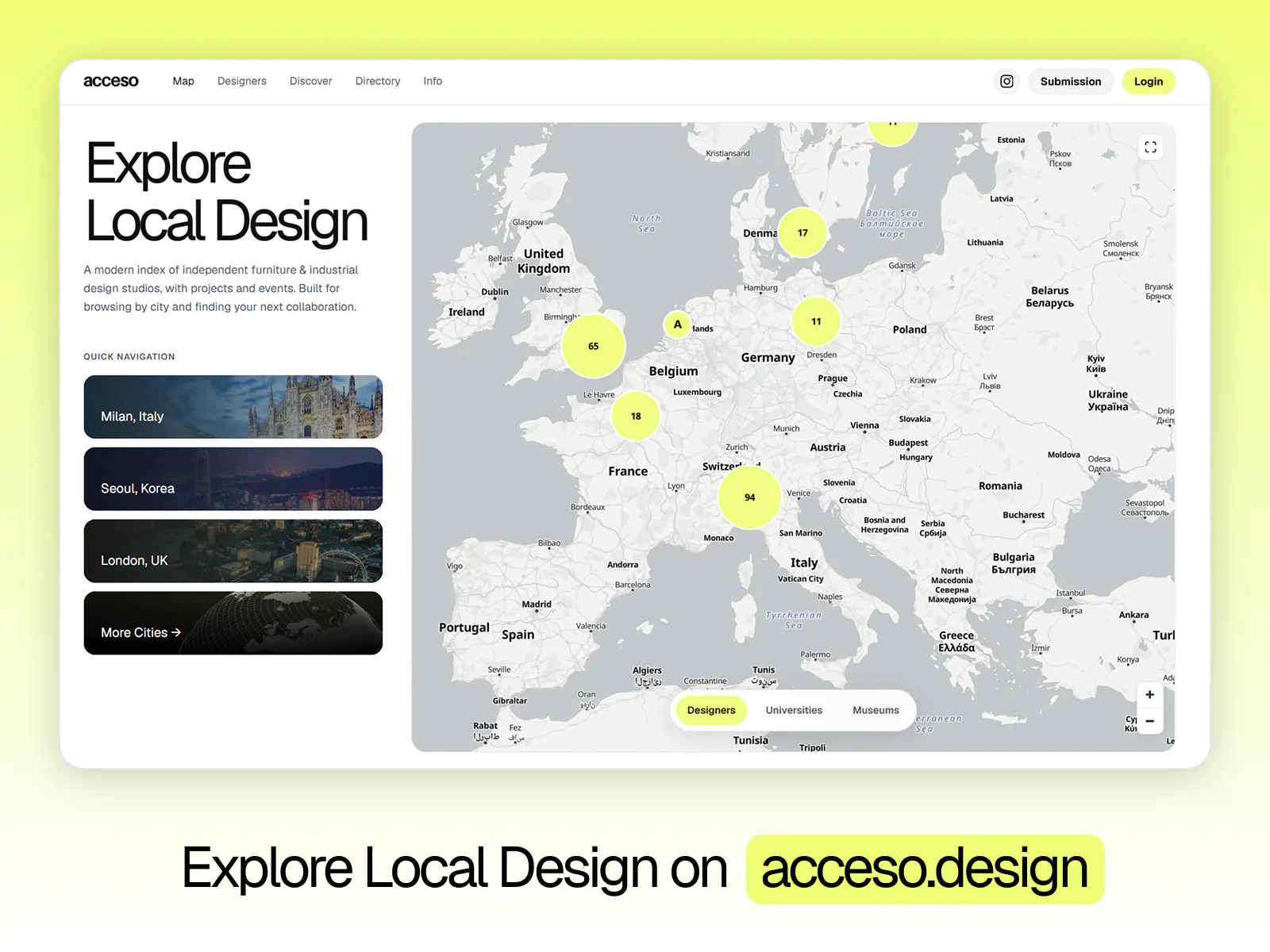
Your local design infopoint.
Acceso Design serves as a comprehensive local design infopoint, offering curated directories of design communities, studios, educational institutions, exhibitions, and opportunities across cities worldwide. It is ideal for designers, students, industry professionals, and enthusiasts seeking to immerse themselves in local design scenes. What sets Acceso apart is its interactive maps and curated listings that provide users with practical, on-the-ground insights into the local design ecosystem, making it easier to discover new venues, connect with local talents, and explore upcoming events. The platform’s focus on cities around the globe ensures a diverse and global perspective on design resources, fostering community engagement and creative collaboration.
Pros
- Extensive curated directory of local design resources and communities
- Interactive maps and practical city-specific information
- Supports networking and discovering events, exhibitions, and opportunities
- Global coverage of multiple cities enhances diversity
- User-friendly interface tailored for both professionals and enthusiasts
Cons
- Currently, limited user engagement or community features
- No indication of integrated booking or event management tools
- Vague details on the pricing structure and premium features
Best for
- • Discovering local design studios and manufacturers when relocating or traveling
- • Finding nearby exhibitions, design weeks, and industry events
- • Connecting with local creative communities for collaboration
- • Researching design opportunities and job listings in specific cities
Pricing: Likely operates on a freemium model, offering free access to basic listings and features, with potential paid plans for enhanced access or premium services. Specific pricing details are not clearly provided.

Turn napkin sketches into production-ready UI in seconds.
Stitch by Google is an innovative design tool that transforms simple napkin sketches into fully editable, production-ready UI designs within seconds. Tailored for founders, product managers, and developers who need rapid prototyping without the time-consuming process of manual mockups, Stitch leverages AI to streamline the design workflow. Its standout feature, Hatter, enables multi-step design tasks, making complex UI creation more accessible and efficient. Additionally, the tool offers new capabilities like automated App Store asset generation and native MCP export, enhancing its utility for app development and deployment. Free to use, Stitch aims to bridge the gap between initial concept sketches and polished UI prototypes, reducing turnaround times and empowering teams to iterate faster. Its integration of AI-driven automation with user-friendly interfaces makes it a compelling choice for those seeking rapid, high-quality UI mockups without sacrificing flexibility or control.
Pros
- Rapid conversion of sketches into editable, production-ready UI designs
- AI-powered features like Hatter for handling complex multi-step design tasks
- Free to use, lowering the barrier for startups and small teams
- Supports export to real code, streamlining development workflows
- Additional tools for App Store asset generation and MCP export
Cons
- May have limitations in customizing highly complex or unique designs
- Dependent on the quality of initial sketches for best results
- Potential learning curve for users unfamiliar with AI-assisted design tools
Best for
- • Quickly turning hand-drawn UI sketches into prototypes for user testing
- • Accelerating the initial design phase for startups and product teams
- • Automating repetitive UI asset creation for app stores
- • Generating production-ready code snippets for development teams
Pricing: Stitch by Google is currently offered as a free tool, making it highly accessible for individuals and small teams. Details about premium features or plans are not specified, but the free access allows users to explore its core functionalities without upfront costs.